

A site ranking first on Google can still see organic click-through rates fall by more than 60% once an AI Overview sits above it. That's the new front door to legal search . And, now ChatGPT optimization for law firms now sits right alongside traditional SEO on every marketing checklist.
ChatGPT, Gemini, and Google AI Overviews don't rank pages the way Google used to. They pick two or three sources and build an answer around them. Everyone else disappears. Read this entire article on AI search optimization for law firms is built to solve, especially for small and solo firms competing against bigger marketing budgets.
My Firm Already Ranks on Google. Why Doesn't ChatGPT Recommend Us?
Google ranks individual webpages. AI search generates answers by combining information from multiple trusted sources. Instead of relying on a single ranking position, it evaluates whether your firm is credible enough to recommend.
Some firms have spent years building strong Google rankings, earning backlinks, and investing in SEO. Yet when they search for their practice area in ChatGPT or Gemini, their competitors appear instead.
Well, AI search doesn't work the same way Google Search does.
That means your website is only part of the picture. AI also considers your attorney profiles, Google Business Profile, legal directories, reviews, structured data, news mentions, and the consistency of your firm's information across the web.
If those trust signals are weak or incomplete, AI has less confidence recommending your firm—even if you're already ranking well in Google.
How ChatGPT & AI Search Choose Which Law Firms to Recommend
If you've been searching how to rank your law firm in ChatGPT, the short answer is: AI models weigh six things before naming a firm.
Authority & Expertise: Content written by an actual attorney, not a ghostwriter with no bar number attached.
Website Trust Signals: HTTPS, clear ownership, a real address, no dead links.
Content Quality: Specific answers, not vague overviews. "Criminal Defense Lawyer" loses to "What Happens After a First DUI Arrest in Texas."
Structured Data: Structured data for AI search law firm pages spells out who you are before a human even reads it — think legal schema markup, not just keywords.
Reviews & Reputation: Volume and sentiment across Google, Avvo, and Yelp.
Mentions Across the Web. Directories, news,podcasts, guest posts — anywhere your name shows up consistently.
Well, none of these work in isolation. AI cross-references all six before deciding you're worth citing — which is really what ChatGPT visibility for law firms comes down to: consistency.
Can a small law firm beat an established firm in AI search rankings?
Yes, even most small law firm practices for 3-4 years can outrank larger firms by publishing helpful, authoritative content, optimizing for local search, and building strong trust signals. In AI search, relevance and expertise often matter more than firm size.
Traditional SEO vs. AI Search Optimization
Rankings still matter. A chunk of searchers skip AI answers and click through anyway. But AI search for law firms adds a second, faster layer of discovery sitting on top of it — some call it GEO (Generative Engine Optimization) for law firms, others call it LLM optimization for law firms. Same idea, different label. Ignore either layer and you're leaving clients on the table.
Build Topical Authority Around Your Practice Areas
AI doesn't trust a single page. It trusts a cluster. This is where entity SEO for law firms comes in a firm that covers DUI, assault, and drug charges under one Criminal Defense hub reads as an expert entity. A firm with one thin "Criminal Law" page reads as generic.
Group content by practice area into legal content clusters, then go deep: Personal Injury should branch into car accidents, truck accidents, and wrongful death. Immigration should branch into green cards, deportation defense, and citizenship. Depth beats breadth here — and it's the same logic behind how law firms actually rank #1 with content marketing.
Write Content That AI Can Quote
AI systems lift short, self-contained answers, not paragraphs buried in backstory. Lead with the direct answer in one or two sentences. Follow with support.
Use FAQs. Use step-by-step guides. Use real statistics with a source attached. Original legal insights beat recycled copy every time — keep paragraphs short enough that a model can pull one clean chunk from your AI-friendly law firm website without editing it.
Implement Schema Markup
Schema turns your page into facts a model can extract without guessing, and feeds directly into your law firm knowledge graph. Google and Schema.org both maintain the vocabulary for this — at minimum, add LegalService and Attorney schema to your homepage and contact page.
Layer in FAQ schema for law firms on guides, Review schema where you have testimonials, and Organization schema site-wide. Breadcrumb and Article schema round it out for larger content libraries. This is part of the technical layer covered in LegalPeel's SEO and digital marketing services.
Improve Your E-E-A-T for Law Firms
Google's own definition of Experience, Expertise, Authoritativeness, and Trust is the framework this section is built on — and the same signals increasingly shape what AI search engines look for too.
- Experience — write from real cases, not hypotheticals.
- Expertise — bylined content from the attorney who actually practices that area.
- Authoritativeness — legal citations, awards, bar associations, listed clearly.
- Trustworthiness — visible reviews, a real phone number, an SSL certificate, a clear privacy policy.
Highlight case wins where ethics rules allow it. AI weighs demonstrated experience heavier than polished copy
Optimize Your Google Business Profile
Your GBP is the backbone of local SEO for AI search — it feeds both Google's local pack and a good chunk of AI-generated local answers. Keep services, practice areas, and Q&A current. Respond to reviews. Upload real office photos, not stock art. This is one of the fastest wins on this list — it takes an afternoon, not a redesign, and it feeds directly into a broader law firm marketing plan.
Create AI-Friendly Legal FAQs
Write to the exact questions people ask, not the ones marketers assume they ask:
- How long does a DUI stay on your record?
- How much does a criminal lawyer cost?
- What should I do after a car accident?
- How long does immigration take?
One question per heading. One direct answer underneath. That's the format that earns ChatGPT citations most often.
Earn Mentions Beyond Your Website
AI cross-checks your site against everywhere else your name appears — a core part of entity optimization. Legal directories, local news, podcast guest spots, Chamber of Commerce listings, HARO-style expert quotes — all of it builds the same signal: this firm is real, and other sources agree. This is also the fastest answer to how to get your law firm cited by AI: show up consistently, everywhere, not just on your own site.
Technical SEO Still Matters
None of the above works on a slow, broken site. Core Web Vitals, mobile responsiveness, clean crawlability, internal linking, HTTPS, an updated XML sitemap, and correct canonicals are still the floor, not a bonus. Platform choice matters here too — see WordPress vs. Webflow for law firms if you're still deciding what to build on.
Optimize for Conversational Search
People don't type "Criminal Lawyer Dallas" into ChatGPT. They ask "Do I need a lawyer after a DUI?" or "What should I do if I get arrested in Dallas?" Write your H1s and headers the way clients actually talk — this is the foundation of AI Overview optimization, not a 2019 keyword tool's suggestion list.
Track AI Search Visibility
Google Search Console and GA4 still matter, but they don't show AI citations. Ahrefs and Semrush are adding AI visibility tracking across AI-powered search engines, including Gemini search optimization and Perplexity AI visibility metrics.
Common Mistakes Law Firms Make
- Publishing AI-generated content with no attorney edit pass
- Thin practice area pages with no real depth
- No author bios attached to legal content
- Duplicate content copied across multiple location pages
- Weak internal linking between related practice areas
- No schema markup at all
- Ignoring reviews entirely
Most of these trace back to the same root cause covered in how to build a solo law firm's website, branding, and SEO from the ground up, instead of bolting AI optimization onto a broken foundation.
Law Firm AI Search Optimization Checklist
✅ Practice area clusters
✅ Attorney bios
✅ Schema markup
✅ FAQs written in client language
✅ Optimized Google Business Profile
✅ Active review generation
✅ Fast, mobile-friendly site
✅ Original legal insights, not recycled copy
✅ Internal linking between related pages
✅ Consistent directory listings
✅ Entity and E-E-A-T optimization
✅ Regular content refreshes
How LegalPeel Helps Law Firms Rank in Google & AI Search
This is where most agencies stop at "add some schema and hope." LegalPeel builds the full stack: AI search audits, law firm SEO for ChatGPT and AI search, Answer Engine Optimization, entity and schema work, topical authority strategy, content marketing, local SEO and digital marketing, technical SEO, and conversion-focused website design — all built around how your firm actually practices, not a template. Whether you're chasing AI SEO for law firms from scratch or fixing a site that's stuck on page one but invisible in ChatGPT, the approach starts the same way: audit first, build second.
So, is your firm the one ChatGPT names, or the one it skips? Contact LegalPeel for an AI search strategy built around your practice.

You just launched a new practice area. The website's live, the practice page is up, and you're waiting for the phone to ring. But nothing's happening. So now you're staring at a proposal from an SEO agency, wondering if you're already behind, or if you're about to get talked into paying for something your site doesn't need yet.
Well, here's the tension. Ahrefs found that only 1.74% of new pages reach the top ten within a year, and the page holding the #1 spot is usually five years old.
That's not what any agency leads with when they're pitching a $2,000/month retainer the week your site goes live. Again, the real question isn't whether SEO for law firm websites matters. It's whether you need to pay for it right now, or whether the money is better spent making sure your site was built correctly in the first place.
Why Waiting For SEO Investment Until After Launch Costs More
Well, most firms don't find this out until it's already too late to fix cheaply. Here's what waiting actually costs.
Redesigning a site that wasn't built SEO-ready
Most lawyers don't think about law firm SEO until traffic doesn't show up.
By then, the site's already built on a structure that has to be torn apart to fix.
Lost indexing time you can't get back
Google needs to crawl and index a site before it ranks for anything.
A slow, poorly structured launch delays that clock, and you don't get those months back.
Your Competitors Stay Ahead
Again, rankings matter mainly in the local area.
A firm that launches SEO-ready in January is months ahead of one that bolts SEO on in June, even with the same content budget.
Technical issues get harder and pricier to fix later
This is where technical SEO for law firm websites gets expensive fast.
Fixing site architecture after launch means touching live pages, redirects, and indexed URLs.
Fixing it before launch means editing a blueprint. One costs $500. The other can run $3,000–$8,000 in cleanup work alone.
SEO Checklist For a New Law Firm Website Before Going Live
Before your law firm website goes live, simply A/B test for keyword optimization, local SEO effectiveness, mobile responsiveness, metadata, and GBP setup.
Here’s an SEO checklist for a solo attorney website.
Keyword Research
Well, this comes first for a reason. Every page you build should map to a real search term a potential client is typing
This is also where you learn how to choose SEO keywords for a law firm website — mapping terms to intent, not just search volume.
Skip this step and you end up with pages that describe your practice areas in your language, not your clients'.
Local Search Optimization
Practice area pages and location pages mapped out from the start.
A firm handling personal injury and family law needs separate, dedicated pages for each, not one page trying to cover both.
Same with location: if you serve three cities, each one needs its own page, not a single "areas we serve" list buried in the footer.
Internal Linking Structure
This is how Google understands which pages matter most on your site.
Practice area pages should link to related blog content, and blog content should link back to the practice area page it supports.
Get this wrong at launch and you're stuck retrofitting links across dozens of pages later.
Title Tags and Meta Descriptions
Every page needs a unique title and description written for the specific service and location it targets—not a copy-pasted template swapped out by city name.
Schema Markup
This is the structured data that tells Google exactly what your firm is, what you practice, and where you're located. Attorneys skip this constantly because it's invisible to visitors.
Core Web Vitals and Mobile Optimization
Over 60% of legal searches now happen on mobile, which is exactly why mobile-first SEO is essential for law firm websites.
Fast load times, tap-friendly buttons, and readable fonts without zooming matter as much as desktop design.
A slow-loading site or one that breaks on a phone screen loses both rankings and the client who was ready to call.
Google Business Profile Setup
This should be claimed, verified, and fully built out—categories, service areas, photos, and attorney bios before launch day.
It's also worth planning to integrate Google Maps on your law firm website for SEO, since it reinforces the local signals your business profile is already sending.
So, this is the foundation. Skip it, and every dollar spent later goes toward undoing decisions made at launch.
[[inner-cta]]
What Can Actually Wait Until After Launch
Link building
Earning links from other legal directories, local business sites, and press mentions is a slow, ongoing process.
But it only works once you have indexed pages worth linking to. Starting this before launch is building on nothing.
Legal Content writing and Publishing
A content calendar matters, but it's a month-two problem, not a launch-day one.
Again, the priority at launch is getting your core practice area and location pages right.
Once that's in place, law firm website content for SEO like blog posts, FAQs, and resource pages are what compounds on top of that foundation.
Authority Building and Digital PR
Getting quoted in local news or contributing to legal publications helps long-term rankings and trust.
This takes months to set up relationships for, and it's far more effective once your site actually has something to point back to.
Advanced Local SEO Expansion
Basic Google Business Profile setup happens before launch.
But things like review generation campaigns, expanding into additional service-area pages, and building out local citations across directories can roll out over the following months.
So no, you don't need a $2,000/month retainer running before your site is even live. But you do need the site built correctly, which is where most agencies quietly cut corners—selling ongoing SEO services on top of a foundation that was never built to support them.
Should New Solo Firms Invest in SEO or Paid Ads First?
Well, it depends on your runway. The right SEO strategies for law firm websites shift based on budget.
Limited budgets should lean on SEO-ready development first and skip paid ads until there's cash flow to sustain them.
Moderate budgets can run both SEO foundation now and light ads to bridge the 6–12 month ranking gap.
Growth-focused firms with $5,000+ to invest monthly can run both in parallel without one starving the other.
What a New Law Firm Should Actually Budget for SEO
- Website + SEO foundation: $3,000–$8,000 one-time
- Local SEO setup: $500–$1,500 one-time
- Monthly SEO (once live): $1,500–$4,000/month
- Content creation: $800–$2,000/month
See our full website + SEO pricing breakdown for what each tier actually includes—and what to expect if you're comparing an SEO company for law firm websites against building the foundation in-house first.
How Do You Know You're Ready for Ongoing SEO?
- Website is live
- Core practice area and location pages are published
- Google Search Console is configured
- Google Business Profile is verified
- Tracking is in place
- Initial content is indexed
Once these boxes are checked, that's your signal to move from foundation to ongoing growth.
Common Mistakes New Law Firms Make
- Launching without keyword research
- Hiring an law firm SEO agency only after the site is "finished"
- Using generic Wix or Squarespace templates with no real SEO structure underneath
- Ignoring local SEO entirely
- Publishing a homepage and nothing else
- Expecting rankings in a few weeks instead of 6–12 months
Our Take: Build SEO Into the Website From Day One
Most law firm website builders think generic Squarespace or Wix setups, or agencies that hand off a templated site with "SEO included" as a checkbox—treat SEO as something you add after the fact. That's backwards.
Hence, our approach is built around SEO-friendly website design for lawyers from the first wireframe.
If you just launched a new practice area and need one of the custom SEO websites for small law firms, this is exactly where LegalPeel excels. Talk to us now
[[last-cta]]

You just started a law firm and are stuck between choosing a law firm name. Should it have your last name, partner name, or branded name?
Again, you don't want to change the name of your law firm in the future. Those are the common phenomena we see when attorney branding starts.
In this guide, we'll take you around with practical name ideas and thoughts on keeping your law firm's /l\l/offline and online presence safe and credible. Stay till the end.
What Makes a Great Law Firm Name?
Law firm names are the front desk of your legal practice. It can be a personal or branded name.
Reputed law firms stay top of mind with their legal brand names. Not because of their clear headshots or million-dollar marketing investment.
So, choosing a credible law firm name is far more important than investing in marketing.
A good law firm name is
- Easy to pronounce and spell
- Professional without feeling outdated
- Flexible enough to grow with your practice
- Distinct enough to avoid blending into competitors
- Trustworthy at first glance
- Short and credible
Names like “Last Name Law” are safe but often forgettable.
On the other hand, overly creative law firm names can sometimes feel disconnected from the seriousness of legal work.
At the end of the day, you have to decide on names with professionalism and behind the scenes of trade name state's prohibition and domain availability.
How do lawyers name their law firms
Most attorneys don’t follow a law firm branding strategy when naming their firm.
Well, there are no naming rules exactly. They usually fall into one of three paths:
1. Founder-Based Naming
It's the traditional route for law firm naming, seriously! And founder-based naming works for solo practitioners as well.
Example style: Smith Law, Johnson & Associates
This is the most common approach because it signals the following:
- Authority
- Professional legitimacy
- Personal accountability
But it also comes with a limitation: it is not very memorable.
2. Hybrid Naming
Hybrid names of law firms are a practical way to align a brand and a personal name. Safest way, yeah!
Example style: Smith Legal Group, Johnson Law Partners
This blends:
- Personal credibility
- Firm identity
This is often the safest long-term strategy for solo attorneys planning to grow.
3. Brand-Based Naming
Modern law firm names follow this naming style. Basically, this naming somehow reduce the chances of changing law firm name when your partner leave or you’re a solo practitioner want to scale
Example style: Lighthouse Legal, Liberty Legal Group
This works best when:
- You want marketing flexibility
- You plan to scale beyond yourself
- You want stronger brand recall
But it must be done carefully—because legal clients still expect authority, not marketing gimmicks.
[[inner-cta]]
Should a Law Firm Use the Founder’s Name?
This is one of the most debated questions among solo attorneys.
Here’s the reality:
- If your work depends heavily on referrals and reputation → your name helps
- If you want inbound marketing and brand recognition → a firm name helps more
- If you plan to expand or hire → brand names scale better
There is no universal answer — only strategic alignment.
The mistake most lawyers make is choosing based on comfort, not business direction.
How to Name a Law Firm: A Step-by-Step Process
Choosing the right name doesn't have to be overwhelming. By following a structured process, you can narrow down your options, avoid common mistakes, and select a name that aligns with your brand, complies with legal requirements, and supports your future marketing efforts.
Define Your Brand and Ideal Client
Before brainstorming names, think about who you want to serve and how you want your firm to be perceived. A family law practice may benefit from a warm, approachable name, while a business or litigation firm often needs a stronger and more authoritative identity.
Generate Law Firm Name Ideas
Create a shortlist using different approaches, such as your surname, a brand name, your practice area, or your location. Focus on names that are simple, professional, and easy to remember.
Review Law Firm Name Examples for Inspiration
Look at successful law firms in your market and beyond. Notice what makes their names memorable, credible, and easy to recognize—but avoid copying competitors.
Test Your Shortlisted Names
Say each name aloud, ask for feedback from colleagues or trusted contacts, and consider how it looks on a website, business card, or Google search result. The best name should be easy to pronounce, spell, and recall for your potential clients.
Check Legal, Trademark, and State Requirements
Before making a final decision, verify that the name complies with your state bar rules and jurisdiction, isn't already trademarked, and has an available domain name and business registration.
Law Firm Name Ideas and Examples
Choosing a name becomes much easier when you see what works in practice. Below are examples across different styles to help you identify the direction that best fits your firm's personality, target clients, and long-term goals.
Traditional Partner Law Firm Name Examples
Traditional law firm names usually feature one or more partner surnames. They project experience, professionalism, and credibility, making them a popular choice for established firms.
Examples include:
- Anderson & Carter LLP
- Wilson, Brooks & Hayes
- Morgan, Ellis & Reed
- Thompson Legal Group
- Harrison & Cole Attorneys at Law
Modern Law Firm Name Ideas
Modern firms often choose shorter, cleaner names that are easier to remember and work well across websites' SEO, social media, and digital marketing.
Examples include:
- Elevate Law
- Harbor Legal
- NorthPoint Law
- Atlas Legal Group
- Summit Law Partners
Cool Law Firm Name Ideas
A creative name can help your firm stand out while still maintaining professionalism. This style works especially well for startups and firms targeting younger clients.
Examples include:
- Bold Counsel
- Justice Found
- NextGen Legal
- Apex Advocacy
- Beacon Law
Good Law Firm Names for Solo Attorneys
Solo lawyers often build their personal reputation around their own name. Others combine their surname with a descriptive brand to create a more scalable identity.
Examples include:
- Sarah Bennett Law
- Bennett Legal
- The Carter Law Office
- Mason Legal Counsel
- Jordan Smith Attorney at Law
Law Firm Name Ideas by Practice Area
Different practice areas often benefit from slightly different branding styles.
Personal Injury
- Victory Injury Law
- Recovery Legal Group
- Justice Injury Lawyers
Family Law
- Harmony Family Law
- Compassion Legal
- Family First Attorneys
Criminal Defense
- Liberty Defense Law
- Shield Criminal Defense
- Strategic Defense Group
Estate Planning
- Legacy Legal
- Heritage Estate Law
- Future Trust Attorneys
Business Law
- Venture Legal
- Commerce Law Group
- Founders Legal
Final Words
Choosing the right law firm name is more than a branding decision—it's the foundation of your firm's reputation and long-term growth. Whether you choose a founder-based, hybrid, or brand-focused name, prioritize credibility, memorability, and scalability. Take the time to validate your choice, check legal requirements, and secure your domain so your firm starts with a name that can grow with your practice for years to come.
[[last-cta]]

Choosing from the best law firm logos isn’t about finding something that looks legal. It’s about building instant credibility ,because most potential clients form a decision in seconds. The strongest attorney brands tend to rely on clear, scalable typography, trust-building color choices, and simple designs that work everywhere.
In this guide, we’ll break down the 13 best law firm logos and why they work, plus the essential elements behind effective attorney logo design and law firm logo design tips you can apply to your own firm.
Essential Elements of Successful Attorney Logo Design
Typography is the Real Logo
Most high-performing lawyer logos are not symbols. They are typography systems.
Because clients don’t remember icons. They remember names.
That’s why serif and structured sans-serif fonts dominate legal branding.
- Serif fonts = authority, tradition, trust
- Sans-serif fonts = modern, clean, approachable
- Custom fonts = premium differentiation
If your logo is unreadable, it is already failing.
Color Builds Instant Trust
Color theory is doing more work than most attorneys realize.
- Blue = trust and reliability
- Black = authority and strength
- Gold = prestige and high-value positioning
- Green = stability and long-term planning
Most successful law firms stick to one primary color.
Symbols Are Optional, Not Required
Many attorneys assume they need:
- Scales of justice
- Gavels
- Columns
- Shields
But the reality is different.
Modern law firm logos often avoid symbols completely. Why?
Because symbols reduce memorability when overused. A clean wordmark is often stronger than a generic legal icon.
Your logo must work everywhere
A logo for your law firm is not just for your website. It must work across:
- Mobile screens
- Business cards
- Court documents
- Social media profiles
- PDFs and documents
- Google Business Profile
- Email signatures
13 Law Firm Logos For Real Branding Inspiration
Most potential clients will never analyze your design choices. They will see your logo for a few seconds and decide whether your law firm website feels credible enough to contact.
Below are 13 real law firm websites and how their legal logos communicate authority in different ways.
1. Martin Pringle

Martin Pringle uses a traditional letterheads logo that reflects stability and long-standing credibility. The firm name is presented clearly with structured spacing, giving it a formal and professional presence. There is no visual distraction or symbolic design—just a clean wordmark that prioritizes trust and readability.
This type of branding works well for established firms because it reinforces authority without needing visual complexity. It feels dependable, which is exactly what legal clients look for.
2. Beall & Mitchell

Beall & Mitchell keeps the identity simple and approachable. The typography is balanced, evenly spaced, and easy to read in both digital and print formats. The logo avoids unnecessary styling, which makes it feel professional without being overwhelming.
This type of clean presentation helps smaller firms appear more credible and client-friendly, especially in competitive local markets.
3. Sheppard Mullin

Sheppard Mullin uses a refined wordmark approach that feels modern but controlled. The typography is structured and consistent, creating a sense of organization and legal authority. It avoids decorative elements and relies entirely on spacing and form.
This simplicity helps the brand maintain consistency across global legal markets while keeping the identity professional and scalable.
4. WilmerHale

WilmerHale’s logo is clean, balanced, and institutional. The typography feels stable and serious, reflecting the firm’s high-level legal positioning. The spacing and weight of the text create a strong visual hierarchy without relying on symbols.
This kind of identity communicates reliability, which is essential for corporate and litigation-focused legal work.
5. Mullen & Mullen

Mullen & Mullen uses repetition in its name as a branding strength. The logo is straightforward and highly legible, making it effective across advertising, local SEO, and legal directories. The typography is bold enough to stay memorable while still maintaining professionalism.
This approach is especially effective for personal injury law, where recognition and recall directly influence client inquiries.
6. Aldous Law

Aldous Law uses a minimal typographic identity that feels personal and direct. The logo does not rely on symbols or decorative elements. Instead, it builds trust through clarity and simplicity.
This style works well for boutique practices because it keeps the focus on the attorney’s name and reputation rather than visual branding tricks.
7. Montgomery Firm

The Montgomery Firm logo follows a structured wordmark style that emphasizes professionalism and clarity. The typography is clean and stable, making the brand feel reliable and accessible.
This type of identity works best for firms that want to balance approachability with legal authority, especially in client-focused practice areas.
8. NMJ Firm

NMJ Firm uses a monogram-style approach that simplifies the identity into initials. This creates a compact and recognizable brand mark that is easy to remember and apply across digital platforms.
Monogram logos like this are especially useful for smaller or growing firms trying to build strong recall without complex visual systems.
9. Atlanta Criminal Defense Team

This identity takes a descriptive branding approach rather than abstract design. The name itself acts as the logo, clearly communicating the firm’s practice area and location.
This strategy is powerful for local SEO and direct-response legal marketing because it prioritizes clarity over creativity, making it immediately understandable to potential clients.
10. THA Law Firm

THA Law Firm uses a simple and structured typographic identity that keeps the focus on readability and professionalism. The logo avoids unnecessary styling and instead relies on clear letterforms and spacing.
This minimal approach helps maintain consistency across website, print, and legal directories.
11. Meyring Law

Meyring Law uses a straightforward wordmark identity that emphasizes the firm name without additional visual complexity. The typography is clean and balanced, making it easy to recognize across platforms.
This kind of branding works especially well for firms that want to appear approachable while maintaining professional credibility.
12. MF Counsel
MF Counsel uses a compact typographic identity that feels modern and minimal. The initials create a strong brand shortcut, while the clean execution ensures readability.
This type of logo works well in digital-first legal marketing where simplicity improves recognition and recall.
13. G. Jacobs Law

G. Jacobs Law uses a personal name-based identity that strengthens trust through direct attribution. The typography is clean and professional, keeping the focus on the attorney’s name rather than decorative elements.
This approach works well for solo attorneys or boutique firms where personal reputation is the strongest marketing asset.
Common Types of Law Firm Logos
Wordmark Logos
A wordmark is your firm name set in a distinctive typeface , no symbol, no emblem.
Martin Pringle, Sheppard Mullin, and WilmerHale all use wordmarks. They work best when the firm name is short, memorable, and carries enough equity to stand alone.
Best for: established firms, solo attorneys using their own names, and boutique practices with strong personal brands.
Monogram Logos
A monogram uses 2–3 initials as the primary visual mark, often with the full firm name in smaller supporting type.
THA Law Firm and MendenFreiman both use this approach. Monograms solve the long-name problem and scale perfectly to favicon and social media profile sizes.
Best for: firms with long names, partnerships with hyphenated surnames, and practices targeting professional or corporate clients.
Emblem Logos
An emblem combines a symbol and text inside a unified shape like a badge or seal.
Atlanta Criminal Defense Team's shield mark is an example. Emblems communicate heritage and authority , but they lose legibility at small sizes if over-detailed.
Best for: litigation firms, defense practices, firms with 20+ years of history that want to signal institutional credibility.
Abstract Logos
Abstract marks use a geometric form that doesn't directly represent a legal concept.
They work best for IP law, tech-adjacent practices, and boutique firms targeting startup or corporate clients who associate abstract marks with innovation.
Best for: IP attorneys, startup counsel, tech-sector practices.
Combination Mark Logos
A combination mark pairs a symbol with a wordmark — either stacked vertically or arranged horizontally.
Mullen & Mullen's square mark is a strong example. Combination marks give you the most flexibility — use the full lockup for formal materials, the symbol alone for social profiles.
Best for: most small and solo law firms building a brand for the first time.
Law Firm Logo Checklist Before Launch
Website Compatibility
- Does the logo work on both white and dark backgrounds?
- Is there a horizontal version for the navigation header?
- Is the file delivered in SVG for infinite scalability?
Business Card Readability
- Is the firm name legible at 8pt font size?
- Does the logo work in black-and-white print?
- Is there a version without a tagline for compact layouts?
Social Media Visibility
- Does the icon-only version work at 400 × 400px (LinkedIn, Google Business Profile)?
- Is the logo legible at 32 × 32px (favicon)?
- Does it hold up as a circular crop ?
Signage Performance
- Does the logo work at a large scale—office door, lobby wall, vehicle wrap?
- Does it reproduce correctly in embroidery (no fine lines or gradients)?
Trademark Considerations
- Has the firm name and logo been searched against the USPTO trademark database?
- Is the logo sufficiently distinctive to qualify for trademark registration?
- Has the designer confirmed the typeface is licensed for commercial use?
Final Thoughts
A solo attorney doesn't need a custom crest or a heritage emblem. They need a wordmark that looks credible on a business card, loads fast in a website header, and tells a referred client they made the right call before they've read a word of your about page.
The firms on this list, from Martin Pringle's 75-year wordmark to Montgomery Law's solo attorney brand, all prove the same point. A law firm logo earns trust over time, across every surface it appears on, every time it looks the same.
At LegalPeel, every law firm website we build includes a full branding package — logo, colour palette, typography, brand guidelines, and all file formats.
All delivered before we build a single page. Want a law firm visual identity built for your solo or small firm practice? Reach out to LegalPeel today.

A call to action isn't just a button. It's the moment a stressed, uncertain visitor decides whether to reach out to you or close the tab and find someone else. Get it right, and your website becomes your best-performing associate. Get it wrong, and you're paying for traffic that never converts.
In this guide, you'll find seven proven calls to action built specifically for law firm websites — each designed to reduce friction, build trust, and turn visitors into consultation requests.
What Makes a Law Firm CTA Actually Convert?
Before you write a single word on your CTA button, you need to understand what's stopping your visitor from clicking.
Reducing Fear and Friction
Make a CTA that prompts leads to take the next step without feeling overwhelmed, pressured, or hesitant. Like: Book a free case consultation, Review my case, Talk to an experienced attorney.
Value Driven CTA's
Without hints of a benefit, a prospective clients wouldn't feel like clicking. Talk about what he would deserve or expect, like
- Protect Your Rights Before It’s Too Late
- Find Out What Your Case May Be Worth
- Get a Clear Legal Strategy for Your Situation
Using You Instead of We
Your CTA should create a conversation tone, like how they can benefit from you, not a generic what I can do tone!
Contact US for legal help, or talk to our attorneys
Examples:
- Get the Legal Support You Need Today
- Protect Your Future With Experienced Legal Guidance
- Talk to a Lawyer Who Understands Your Situation
Using Trust-Based Language
Trust-building CTA language helps reassure visitors that the process is confidential, professional, and client-focused. Words like “confidential,” “direct attorney access,” and “case evaluation” can increase consultation conversions.
- Your Consultation Is 100% Confidential
- Speak Directly With an Attorney
- Get Honest Answers About Your Legal Options
7 Proven Calls to Action for Law Firm Websites
Most law firm websites use the same tired CTAs and wonder why visitors leave. These seven are different and the results show it.
1. Free Consultation CTA — The Non-Negotiable
The free consultation CTA for lawyers is still the highest-converting CTA on any law firm website. But the copy matters more than the button color.
Weak version: Contact Us
Strong version:
- Get Your Free Consultation
- Practice area-specific CTAs
- Injured in an accident? Get a free case review today.
Using a word like "consultation" in the CTA may intimidate the average person. A direct phrase like "talk to a lawyer" often yields better conversions.
Most attorney websites use "Free Consultation" and stop there.
The attorneys who convert more add one of two things directly above the button: a risk-removal line. Here are the best call-to-action phrases for law firms that increase conversions.
- No fees unless we win
- Response within 2 hours
CTA + trust signal is what turns a click into a submitted form.
Where to place it:
- Hero section, above the fold
- End of every practice area page
- Sticky header on mobile
Bonus: Need help writing your hero section copy that leads into your CTA? See the best solo lawyer website examples, and you'll get it.
2. Click-to-Call CTA — The Mobile-First Essential
Adding a prominent click-to-call button in the mobile header is one of the highest-impact, lowest-cost CTA improvements a law firm can make.
Over 60% of legal searches happen on mobile. A potential client searching personal injury attorney near me at 9 pm wants to call, not fill out a form.
Copy formula:📞 book a consultation
Or for solo attorneys:Call [Attorney Name] Directly — (XXX) XXX-XXXX
Again, most attorney websites bury the phone number in the footer. A strong call-to-action belongs in the mobile header, permanently visible, on every single page.
Where to place it:
- Mobile sticky bar at the bottom of every page
- Top navigation bar (mobile)
- Hero section alongside the consultation button
3. Practice Area-Specific CTA — The Conversion Multiplier
A generic CTA on a specific practice area page is a missed opportunity.
Many people enter attorney websites through practice area pages rather than the homepage. A CTA on every page l ensures visitors always have a clear next step.
Personal injury CTA example:
Hurt in a car accident? Free case review, no fees unless we win.
Family law CTA example:
Going through a divorce in [City]? Book a confidential consultation today.
Criminal defense CTA example:
Charged with a crime? Talk to a criminal defense attorney now — available 24/7.
So, the formula is simple: name the problem + name the client + remove the risk.
That three-part structure is what makes compelling calls to action examples for specific practice areas versus generic law firm pages.
Where to place it:
- Bottom of each practice area page
- Mid-page after the practice area description
4. Intake Form CTA —Higher Conversion
The ideal form for scheduling a free case review should be: name, phone number, email, and a brief description of the case.
People feel uncomfortable if asked to provide too much personal information from the very beginning.
Most law firm contact forms ask 10+ questions. That kills attorney website lead generation before it starts.
High-converting form CTA copy: Tell Us About Your Case — Takes 60 seconds
Under the form headline, add three fields max:
- Full name
- Phone number
- What happened? (2–3 sentence text field)
That's it. Get the lead first. Collect details on the consultation call.
Weak form button copy: Submit / Send
Strong form button copy: Send My Free Case Review Request →
Where to place it:
- Contact page (primary)
- Homepage, mid-page or sidebar
- End of every blog article
5. Trust-Building CTA — For Research-Stage Visitors
Your law firm website wouldn't only confirm leads. Some are comparing attorneys, reading reviews, and deciding who to trust first.
Matching the tone of your CTA to the audience's intent helps build trust and encourages action without pushing too hard.
Incorporate softer prompts to engage visitors still in the information-gathering stage.
Trust-building CTA examples for lawyers
- Read What Our Clients Say →
- See Our Case Results →
- Download Our Free [Practice Area] Guide
These attorney website conversion tips work because they give the research-stage visitor a lower-commitment action. They stay on your site longer, build trust, and convert on a return visit.
Where to place it:
- About page — below attorney bio
- Homepage — between hero and practice areas
- Blog posts — mid-article
6. Urgency CTA — For Time-Sensitive Practice Areas
Personal injury, criminal defense, and immigration cases all have deadlines. Statute of limitations, arraignment dates, visa expiration. Your CTA should reflect that reality.
Personal injury urgency CTA:
Statute of limitations may apply to your case. Get a free review today before time runs out.
Criminal defense urgency CTA:
Charged? Don't wait. Every hour matters in a criminal case — call now.
Immigration urgency CTA:
Visa deadline approaching? Talk to an immigration attorney today.
Well, urgency CTAs feel manipulative if they're fake. But for practice areas where real deadlines exist, this is honest and necessary.
A personal injury client who waits 3 years loses their right to sue entirely. Your CTA should tell them that clearly.
Where to place it:
- Practice area pages for PI, criminal defense, immigration
- Homepage hero for practices with time-sensitive cases
7. Mobile Sticky CTA — The Silent Converter
A persistent click-to-call button in the mobile header visible without scrolling is one of the fastest wins for law firm website conversion optimization.
A mobile-friendly law firm CTA doesn't need to be complicated. Two taps, no scrolling, no searching. A mobile user at 11pm who just had an accident doesn't want to navigate. They want to call or send a message in under 10 seconds.
Where to place it:
- Bottom of every page — mobile only
- Stays visible as the user scrolls
Where to Place CTAs on a Law Firm Website
The best law firm homepage CTA best practices follow one rule: never make a visitor hunt for the next step.
Here's the minimum CTA placement strategy for any attorney website:
CTA Design Best Practices for Attorney Websites
Button Color and Contrast
Button text must achieve a minimum contrast ratio of 4.5:1 against its background to meet WCAG AA compliance. Use tools like WebAIM's Contrast Checker before finaliZing any CTA color palette.
Navy, deep charcoal, and rich burgundy read as authoritative — colors that legal audiences associate with competence and trustworthiness.
Avoid yellow-on-white or light-gray-on-white combinations that pass the eye test but fail accessibility audits.
Mobile Optimization
- Set minimum button height to 44–56px on mobile viewports
- Pin a sticky "Call Now" or "Free Consultation" bar at the bottom of mobile screens
- Use tel: links so tapping the CTA immediately opens the dialer
- Ensure form modals triggered by CTAs are scrollable and don't block the keyboard
- Test tap-zone accuracy on real devices, not just browser emulators
ADA Accessibility Considerations
- Add aria-label=Schedule a free consultation to icon-only or ambiguous buttons
- Ensure keyboard users can tab to and activate every CTA
- Provide visible: focus rings — never use outline: none without a custom replacement
- Avoid conveying urgency through color alone pair with text
- Test CTAs with NVDA, VoiceOver, or axe DevTools before launch
Form Length and Conversion Rate
Keep homepage or hero CTAs to 2–3 fields maximum
- Use conditional logic to show additional fields only after the first are completed
- Offer two paths: a short form for quick contact, and a longer intake for detailed consultation scheduling
- Mark optional fields clearly — never leave visitors guessing what's required
- Auto-format phone fields and disable the submit button until the minimum required fields are valid
How to Measure CTA Performance on Law Firm Websites
Conversion Rate Tracking
Track the percentage of visitors who complete a desired action, such as booking a consultation or submitting a form.
This helps identify which pages and CTAs generate the most leads.
Click-to-Call Tracking
Monitor how often visitors click your phone number or call button. This is especially valuable for practice areas where potential clients need immediate legal assistance.
Form Submission Analytics
Measure form submissions, completion rates, and abandonment rates to identify friction points and improve lead generation.
Heatmaps and User Behavior Tools
Use heatmaps and session recordings to see where users click, how far they scroll, and whether they engage with your CTAs.
A/B Testing CTA Copy
Test different CTA variations, such as "Schedule a Consultation" vs. "Speak With an Attorney Today," to determine which version drives more conversions.
Key Takeaway: Regularly tracking CTA performance helps law firms improve conversions, generate more qualified leads, and maximize website ROI
Final Words
Law firm website CTA should have one direction: convert. There's no huge rules about CTA placement. But, you should write the CTA in a way that feels urgent and reliable for the client.
So, does your website call to action for law firm conversion? If not, fix it soon. Or, reach out to us for a compelling CTA and A/B test now.

Building a solo lawyer website often feels more complicated than it should be.
You need a site that works for one attorney, not a 50-lawyer firm. And most design inspiration online shows you big firm websites with 30 pages, multiple attorney profiles, and marketing budgets you don't have.
So, here are the best solo lawyer websites worth studying with real design breakdowns you can apply to your own practice.
What the Best Solo Lawyer Websites Actually Look Like
A solo law firm website should include essential pages and features without being overly complex. Well, auditing 150+ best solo practitioner attorney websites in the USA, they share four things in common:
2–5-page structure — Solo practitioner website has mainly 4 or 5 pages, like Homepage, About Attorney, Contact Page, Testimonials, or FAQs.
Strong branding — Integrate branding color and consistency across all pages, CTA's, and use a professional headshot in the hero section.
Immediate trust signals — Clear positioning with a micro niche like an Estate planning Attorney in Chicago, and highlight experience, certification and client testimonials.
Mobile-first experience — Most legal visitors come from mobile devices. The best solo lawyer websites load fast, keep forms short, and make the phone number visible immediately.
Well, most solo attorneys overthink this. Your referral contacts are already sold on you. Your website just needs to not lose them.
Bonus: Not sure what pages your solo law practice website actually needs? Read our guide on small law firm website design, which covers essential pages, CMS options, and what to skip.
7 Best Solo Lawyer Website Examples
Here are the top picks for the best solo law firm websites in 2026. Each one shows a different approach to personal branding, page structure, and conversion design.
1. Carpenter Lourie

Carpenter Lourie is a solo practitioner attorney website that gets branding right from the first scroll.
Their hero section immediately leads with a clear positioning statement about the law's needs. She provides legal help for real estate and business law.
Clean navigation with 7 links keeps focus on a clear practice area. But this 7-category isn’t essential for a solo lawyer to immediately start a law firm website. As law firm website design costs increase for several pages.
The site's brand colors and typography are consistent across every page — a detail that separates professional solo attorney websites from DIY templates.
2. Goldberg Law

Goldberg Law is a strong example of a solo law practice website that builds trust without a complicated design.
Their homepage answers all three questions above the fold: who this attorney is, what area of law they practice, and exactly who they help.
A single free consultation button appears in the navigation bar and again mid-page, making it impossible to miss, regardless of how far a visitor scrolls.
The attorney's headshot is professional, warm, and positioned next to a direct credibility statement. That combination reduces bounce rate faster than any design element.
Again, no unnecessary animations or multi-column layouts. Just clean typography, clear hierarchy, and a site that loads in under two seconds.
Read more: How to choose the best law firm builder and hosting provider for your budget.
3. BK Schott Law

Ben Schott's attorney profile page is one of the best solo lawyer website examples for personal branding done well.
Well, most solo attorneys write their about page like a CV. Ben Schott writes his like a conversation. That tone difference is what makes a referred client feel confident enough to pick up the phone.
Here, the solo law firm website's vCard download option makes it easy for mobile visitors to save contact information directly.
Clear bar admissions, practice area focus, and direct contact options make this solo law firm website an example you can learn from, regardless of your practice area.
4. Sutton & Smyth, LLP

Sutton and Smyth LLP is a great example of two solo practitioner attorney websites. The web design starts with two professional pictures of Sutton and Smyth smiling faces that instantly create authority.
The navigation stays intentionally simple with only six primary pages. That structure improves usability and keeps potential clients focused instead of overwhelmed.
Typography, spacing, and visual hierarchy are also handled consistently throughout the site.
Learn how to design a trust-building solo lawyer website without extra budget.
5. StoneMyers Law

Stonemayerslaw is another good example of a law firm website, designed to convert legal leads easily.
This firm positions itself as a differentiator with bold branding and copy placement. A very simple yet conversion-friendly UX design brings clients a clear decision navigation.
Early consultation can really happen due to clear CTA placement on the homepage. Again, Melissa exactly targets Texas leads and clearly defines how she will help.
6. Austin Accident Lawyer

Austin Accident Lawyer is a strong example of a high-intent personal injury law firm website built for immediate lead capture. The hero section is direct, with a clear injury-focused value propostion .
The design prioritizes urgency and action, using prominent CTA buttons. This reduces friction and pushes users toward contact without distraction.
Visually, the site leans on trust-building elements such as case results, attorney credibility cues, and client-focused messaging. The layout is structured in a way that guides users from problem → trust → action very quickly, which is ideal for accident law leads.
7. Mary Jones Austin Collaborative Divorce & Mediation Attorney

Mary Jones Family Law is a good example of a solo practitioner family law website that focuses heavily on clarity, emotional positioning, and trust. The design uses a calm, professional aesthetic that aligns with sensitive legal services like divorce and custody.
The homepage structure is simple but intentional—clearly defining practice areas, attorney introduction, and consultation access without overwhelming the visitor. This helps users quickly understand what type of legal help is offered and whether it matches their situation.
CTA placement is consistent but not aggressive, which fits the emotional nature of family law clients. The site builds trust through personal branding, approachable imagery, and straightforward messaging that supports decision-making rather than pressure.
Solo Law Website Structures That Convert Best
2–3 Page Model
Best for attorneys who get most clients through referrals and just need a credibility anchor online.
- Home — who you are, what you do, one CTA
- About — personal story, credentials, bar admissions
- Contact — phone, form, map, office hours
That's it. Three pages, zero confusion, instant trust.
4–5 Page Model
Best for solo attorneys who want both referral credibility and local SEO rankings.
- Home
- About Attorney
- Practice Area
- Results
- Contact
The difference between 3 pages and 5 pages isn't complexity — it's local SEO. Each practice area page targets a different keyword cluster. A family law attorney with separate pages for divorce, custody, and child support captures three times the search traffic of a generic "family law" page.
Bonus: Check how to build a solo law firm website that converts
Final Takeaway
The best solo lawyer websites are simple, not complex.
Your advantage as a solo attorney is not budget or volume — it's personal connection. A potential client chose to search for an individual attorney, not a firm. Your website's job is to make them feel like they've already met you before they dial.
So, design is not an advantage.
At LegalPeel, we've built solo attorney websites that improve local visibility from the first 60 days. If you want a Webflow-built solo law firm website with personal branding, AEO structure, and a consultation funnel built in from day one, reach out to LegalPeel today.

WordPress remains the most popular choice for law firm websites due to its flexibility for custom code, strong SEO/AEO capabilities, and a familiar CMS for non-technical lawyers and marketing teams.
Whereas, Webflow offers faster launches, built-in hosting and security, and a scalable CMS, making it ideal for modern legal websites focused on performance and simplicity.
In this guide, you'll get a head-to-head comparison with clear benefits according to firm size, goals, and cost. Let's dive into the details.
WordPress vs Webflow for Law Firms: Quick Comparison Table
1. Security and Compliance Comparison
A secure website for a law firm is the first factor you should consider.
Because lawyers and attorneys need to keep sensitive client information, client management software on a website, which you need to protect from hackers and vulnerabilities.
WordPress Security for Law Firms
WordPress is secure for law firms' websites, but when it's managed with secure hosting and well-maintained service.
Since WordPress is an open source platform, it's less secure and more vulnerable to online attacks.
Key factors that affect WordPress security:
- Hosting quality: Cheap hosting means a higher risk of breaches
- Plugins: Outdated or poorly coded plugins can create vulnerabilities
- Maintenance: Regular updates are essential for core files, themes, and plugins
For law firms, you need to build a WordPress website for a law firm with secure hosting, updated plugins, and well-maintained service.
Webflow Security for Legal Websites
Webflow offers hosting and security features built into its ecosystem. Webflow takes care of enterprise-level security features with global CDN hosting, and SSL encryption for all websites.
Again, you don't need to update plugins, themes or hosting providers. Unlike WordPress, it saves on technical maintenance cost. This makes it ideal for firms wanting a secure website for law firm operations without technical overhead.
That's why legal services are now moving from WordPress to Webflow.
ADA Compliance for Legal Website
Law firm websites must meet certain legal and accessibility standards, especially in regions like the U.S.
Key compliance areas include:
- ADA accessibility (WCAG guidelines)
- Privacy policies and data handling
- Clear disclaimers and legal content structure
Both platforms can achieve compliance, but:
- WordPress requires manual setup or plugins
- Webflow allows a clean semantic structure and controlled design, making compliance easier to maintain
Which Website Platform Is Safer for Lawyers?
For most firms, Webflow provides higher built-in security with less maintenance. Whereas WordPress requires higher costs for regular updates, maintenance, and secure hosting.
2. SEO, AEO and Performance Comparison
WordPress and Webflow both offer high-end SEO and AEO features, but they are best suited to different roles.
WordPress SEO Capabilities
WordPress offers advanced SEO and AEO features, along with two strong plugins, Yoast and RankMath, for full control over optimisation.
You have full control over SEO with its advanced features like schema markup, meta tags, and URL structure.
This makes it ideal for law firms that rely on heavy content marketing, such as publishing blogs, practice area pages, and location-based content at scale.
Webflow SEO Features
Webflow provides a cleaner and more streamlined SEO/AEO setup. It includes built-in controls for meta tags, alt text, open graph settings, and custom schema without relying on plugins.
Its clean code structure also helps search engines and AI systems better understand content, which supports AEO performance. While it may not have as many automation features as WordPress, it covers all essential SEO and AEO fundamentals efficiently.
Which Platform Ranks Better for Law Firms?
In terms of ranking, neither platform has a built-in advantage. WordPress can scale more aggressively for content-driven SEO, while Webflow ensures strong technical SEO and clarity for AI understanding.
Ultimately, success in Law firm SEO and AEO depends on how well you structure content, implement schema, and build authority, not just the platform you choose.
3. Hosting and Speed
Website hosting and speed directly impacts user experience, SEO rankings, and conversion rates. Law firm websites must load quickly to retain potential clients and reduce bounce rates.
WordPress Hosting
WordPress relies on third-party hosting, which gives law firms more control and scalability but also adds responsibility. Managed WordPress hosting can deliver strong performance, but it requires ongoing maintenance, including updates, backups, and security management. Costs typically range from $20 to $100+ per month, depending on the provider and performance needs.
Webflow Hosting
Webflow offers a fully built-in hosting system with CDN, security, and updates included. This makes it much simpler to manage, especially for law firms that don’t want technical overhead.
4. Design and Customization
Both WordPress and Webflow offer strong design capabilities, but they differ significantly in how much control, simplicity, and scalability they provide to law firms.
WordPress Design Flexibility
WordPress offers thousands of free and premium themes specifically built for law firms, making it easy to get started quickly.
However, many of these themes come with design limitations, and achieving a fully custom look often requires additional plugins or developer support. While customization is possible, it can become complex and layered over time.
Webflow Design Flexibility
Webflow has pre-made custom templates and more design control. Its no-code builder helps to design a legal website from scratch without writing code.
As a busy attorney or lawyer, you may want to launch a simple law firm website. Then, Webflow is a better choice than WordPress.
Also read: Best small law firm website design inspiration for 2026.
Which Platform Is Better for Branding?
Webflow clearly leads in creating a strong, consistent, and high-end brand presence. With complete design control, you can build a website that reflects authority, trust, and professionalism.
This is exactly where LegalPeel excels. By leveraging Webflow’s full customization capabilities, LegalPeel creates brand-first websites for attorneys and lawyers.
5. Development and Scalability
As a firm grows, the website must be able to handle more content, more traffic, and evolving marketing needs without becoming expensive or difficult to manage.
Both platforms offer scalable solutions, but they differ significantly in how development is handled and how costs accumulate over time.
WordPress Development for Law Firms
WordPress is highly flexible when it comes to development. With access to thousands of plugins, custom code, and integrations, you can build almost any functionality a law firm needs.
However, this flexibility comes with a trade-off: developer dependency.
Many WordPress sites rely heavily on developers for updates, fixes, and even small design changes. Over time, this creates ongoing costs and slows down marketing execution.
Webflow Development for Legal Services
Webflow website development combining design, CMS, and hosting into one platform. Websites can be built significantly faster. Most updates, like content, layout, or SEO, can be handled directly by marketers without developer involvement.
This leads to faster builds, lower maintenance, and greater independence. Webflow also eliminates many technical overheads like plugin conflicts, security updates, and manual backups, making it easier to scale without increasing operational complexity.
[[inner-cta]]
Webflow vs WordPress Cost for Law Firms: Comparison Table (2026)
WordPress Website Cost for Law Firms
Monthly Cost
- Shared hosting: $5 – $25/month
- Managed hosting: $25 – $100+/month
Additional Costs
- Premium theme: $50 – $100 (one-time)
- Plugins: $100 – $500/year
- Maintenance: $50 – $200/month
Website Build Cost
- Basic site: $500 – $3,000
- Custom law firm site: $3,000 – $60,000+
Long-Term Cost (Yearly)
- Hosting + plugins: $300 – $1,200/year
- Maintenance: $600 – $2,400/year
Total (realistic): $1,000 – $5,000+/year
Webflow Website Cost for Law Firms
Monthly Platform Cost
- Basic plan: $14 – $18/month
- CMS plan: $23 – $29/month
- Business plan: $39 – $49/month
Webflow Website Build Cost
- Basic site: $1,000 – $3,000
- Professional law firm site: $3,000 – $5,000
- Custom high-end site: $5,000 – $7,000+
Long-Term Cost (Yearly)
Total (realistic): $300 – $1,500+/year
Want to build an affordable law firm website? Check out how much are attorney website costs in 2026.
When to Choose WordPress vs Webflow
Choose WordPress If:
- You need advanced customization
- You have a content-heavy SEO strategy
- You have a plan to scale mid-sized firms
- Your firm relies on organic traffic as the main lead source
- You need advanced functionality like client portals, case tracking, and CRM integrations
Choose Webflow If:
- You prefer security, speed, and simplicity without dealing with plugins or updates
- You prioritze professional and brand-first lawyer website
- You need a fast launch for ads, referrals, or local presence
- You don’t want to rely on developers for every small change
- You want to keep costs minimal without sacrificing quality.
Final Verdict
Both Webflow and WordPress have their own strengths and limitations. There is no universal winner. The best choice depends on your law firm’s size, goals, budget, maintenance capacity, and SEO strategy.
WordPress is better suited for firms that need large-scale content publishing, advanced customization, and complex SEO systems.
Webflow is better suited for firms that want clean design, strong security, faster launch, and minimal maintenance.
For most of our clients running small to mid-sized law firms, Webflow is the preferred choice because it offers the right balance of design flexibility, security, performance, and cost efficiency without an ongoing technical burden.
If you’re looking for a Webflow agency for law firms, LegalPeel can help. Reach out to us and get your lead-generating law firm website today.
[[last-cta]]

Starting with the honest question.
Do you know how many people are searching for a personal injury lawyer?
The honest answer is: 246.0K people in just 1 month.
So, if you own a personal injury law firm but have no idea about personal injury law firm marketing, this guide will help you with this:
How does personal injury law firm marketing help personal injury attorneys attract qualified leads through SEO, conversion-focused lawyer web design, and local lead generation and branding strategies?
What Is Personal Injury Law Firm Marketing?
Personal injury law firm marketing is the process of promoting PI legal services online through SEO, website design, content marketing, and paid advertising to attract people who are facing a problem. It focuses on:
- Lead generation(PPC, CPC, paid add, Email marketing)
- Content marketing( make trust authority content)
- Pi law form website design( Conversion & user-centric)
- SEO for personal injury law firm (on-page, off-page, technical SEO
Personal Injury Law Firm Digital Marketing Checklist
How much should a personal injury law firm spend on marketing?
[[inner-cta]]
1. Personal Injury Law Firm Website Design
What is this?
Personal injury law firm website design means creating a professional website that helps injured people quickly understand your services and contact your firm. A good website is an important part of personal injury law firm marketing because a perfect ui & ux experience is essential for attracting more clients.
How it’s done for personal injury lawyers
The site should include clear pages for accident cases, strong contact buttons, and client reviews. It should also load fast and work well on mobile since more than 60% of legal searches come from mobile users. Good website design supports marketing for personal injury law firms and improves client trust.
[Bonus]This guide also helps you with: Solo law firm website design and Personal injury lawyer website cost
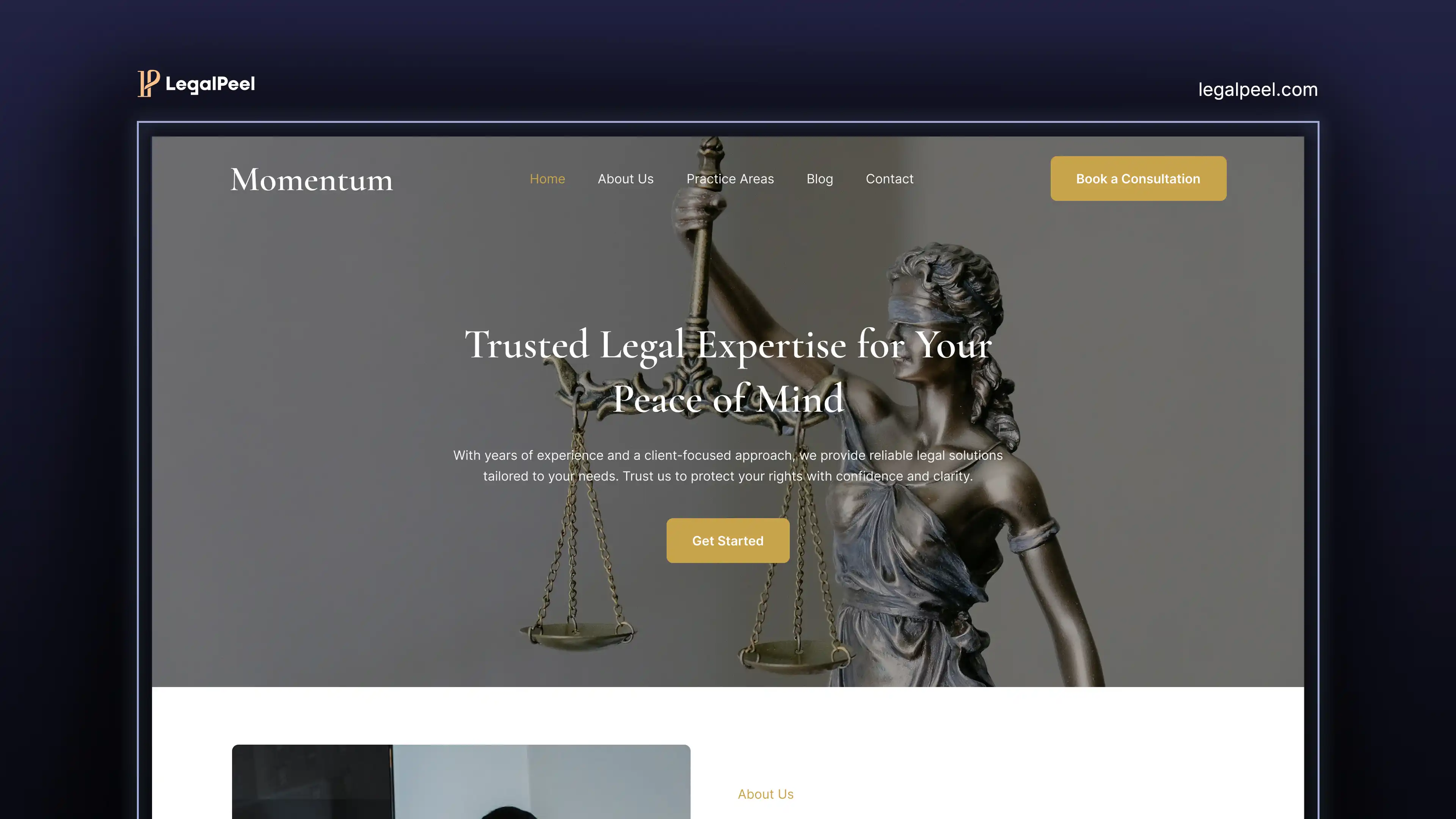
Best live work example law firm website design: Momentum-porfolio for solo law firm
2. How seo for a personal injury law firm is done?
What is this?
Personal injury lawyer SEO helps a law firm's website appear higher in search results when people look for legal help after an accident. It is a key part of personal injury law firm marketing.
SEO for personal injury lawyers
Law firms use keywords like personal injury lawyer SEO and personal injury law firm marketing in service pages and blogs. Creating helpful content, improving internal links, and getting backlinks also help improve rankings and support a strong personal injury law firm marketing plan.
3. Personal Injury Law Firm Branding
What is this?
Personal injury law firm branding is about creating a strong and trusted identity for your firm. Good branding helps people remember your firm when they need legal help.
How it’s done for personal injury lawyers
Branding includes a professional logo, clear messaging, and consistent design across the website and marketing channels. Strong branding combined with marketing and website design helps build trust and support the marketing and personal injury law firm's growth.
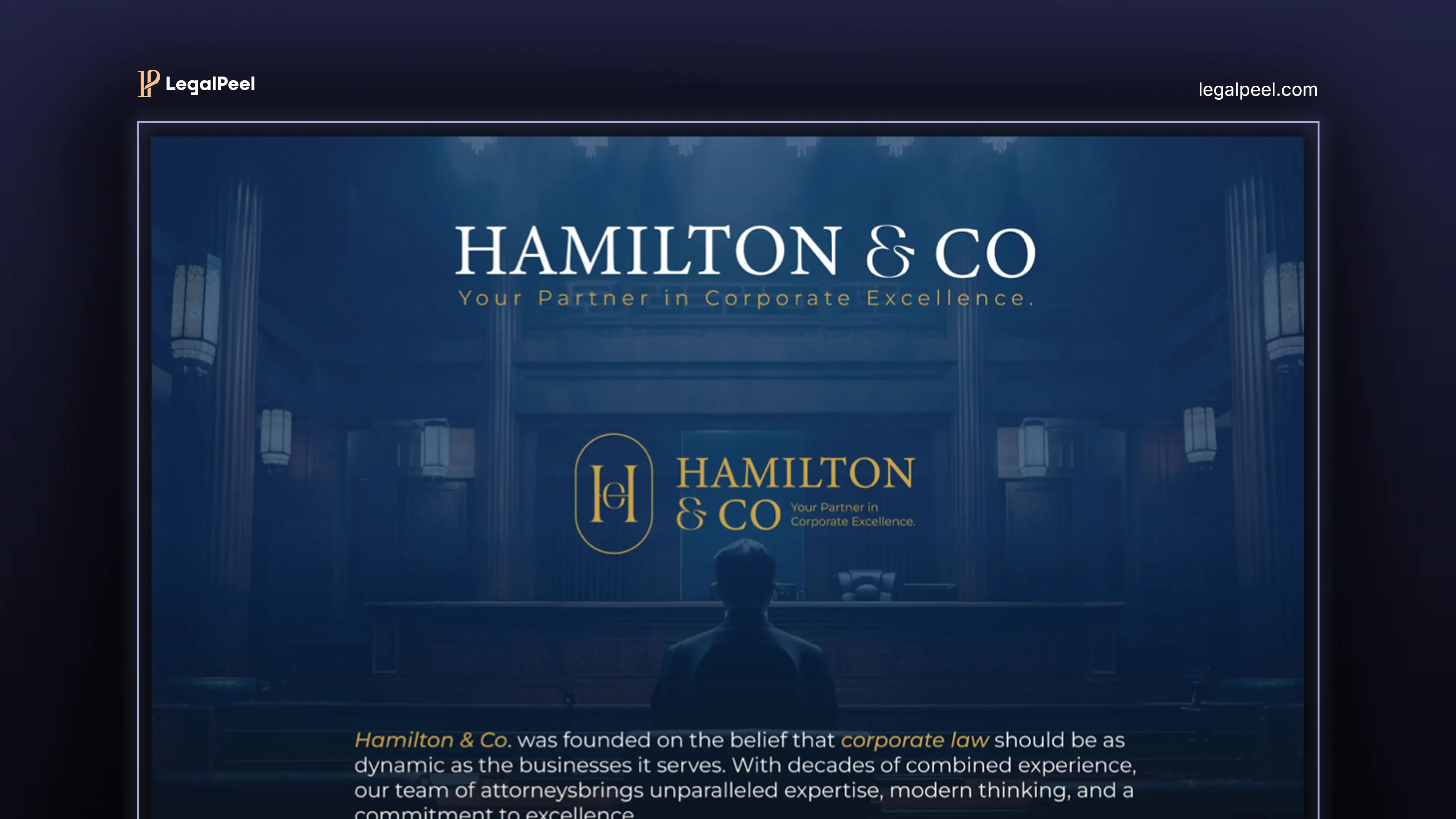
Best live example of law firm branding: Hamilton-Co branding portfolio
4. Personal Injury Lawyer Lead Generation
What is this?
Personal injury lawyer lead generation means attracting potential clients who need legal help after an accident. Many people search online before contacting a lawyer, so digital marketing is important.
How is lead generation done for personal injury lawyers
Content marketing
Publishing blogs, guides, and legal tips helps answer client questions and supports personal injury lawyer SEO.
PPC advertising
Paid ads help law firms appear at the top of search results for high-intent keywords.
Email marketing
Email newsletters and updates help keep potential clients connected and support long-term personal injury law firm marketing.
For your extra bombing, this mystery will help lead generation for lawyers and the best lead generation company
How to Choose the Right Personal Injury Law Firm Marketing Agency
Choosing the right law firm marketing agency is important for every law firm, personal injury lawyer, or personal injury law firm that wants more visibility, a stronger online presence, and more new client opportunities.
Here are simple tips to choose the right agency.
1. Look for Personal Injury SEO Experience
Not every agency understands seo for personal injury or seo for personal injury lawyers. Choose seo professionals who have real experience working with personal injury attorneys, injury attorneys, and personal injury lawyers. They should know how potential clients search for terms like lawyer near me or personal injury lawyer on search engines like Google.
2. Strong Law Firm SEO Strategy
A good agency must offer clear law firm seo and personal injury lawyer seo plans. This includes keyword research, optimizing website pages, improving visibility, and helping your personal injury firm rank well in competitive results.
3. Focus on Local SEO
Most potential client searches are local. A strong agency should provide local seo and local seo for personal injury so your personal injury law firm appears when people search for a personal injury attorney nearby.
4. Content Marketing That Builds Trust
Good content marketing helps build trust and answers frequently asked questions from injured clients. Agencies should create helpful blogs and guides about seo for personal injury law, accident claims, and legal processes. This improves seo efforts and attracts more potential clients' search traffic.
5. Clear Marketing Strategies
Ask the agency about their marketing strategies and marketing strategies for personal injury. Strong strategies for personal injury lawyers should include seo strategies, seo strategies for personal injury, paid ads, and reputation building to position your firm better in the legal market.
6. Proven Personal Injury Marketing Results
A reliable agency should show real results from personal injury marketing, marketing for personal injury, and personal injury law firm marketing campaigns. They should explain how their seo strategies help law firms get more leads and consultations.
Finally, what is your next step as a personal injury lawyer?
As a personal injury lawyer, you have to make a credible decision. Why? how? when? Then you have to make a decision, law form marketing.
To make an informed decision, we have already covered all aspects of personal injury law firm marketing.
If you need any kind of services related to marketing, design, SEO, branding, or anything else, LegalPeel is here to be your friend.
[[last-cta]]

Finding new clients in the U.S.A. legal market isn’t easy. Competition is suffocated, and traditional advertising doesn’t cut it anymore.
That’s why law firms need you for their lead generation if you are a legal professional.
Top agencies blend sales and marketing expertise with data-driven marketing efforts to bring you every qualified potential lead.
In this guide, we’ll reveal the top U.S.A. legal lead generation companies and how they can transform your firm’s growth in 2026.
What Are Legal Lead Generation Companies?
Legal lead generation companies are specialized marketing agencies that help law firms attract clients through:
- SEO and local search optimization
- Pay-per-click (PPC) advertising
- Content marketing and blogs
- Client intake systems
Their goal is to provide consistent, high-quality leads, allowing attorneys to focus on practicing law rather than chasing prospects.
What services do legal lead generation companies offer?
Finding new clients isn’t easy, especially in competitive markets like the U.S.A. That’s where lead generation companies come in. Their job is simple: bring you qualified leads or clients so that you can focus on closing deals. Here’s how they do it.
1. Email Marketing
They send targeted email campaigns to prospects. These emails share useful content, offers, or reminders that move people closer to becoming clients.
2. Social Media Ads
Companies run ads on LinkedIn, Facebook, and Instagram. With advanced targeting, they reach people by location, age, profession, or interests, so you get the right leads.
3. Search Engine Optimization (SEO)
By optimizing websites with the right keywords and content, they help businesses rank higher on Google. More visibility means more organic leads without paying for every click.
4. Pay-Per-Click (PPC)
PPC ads place your business at the very top of search results. You pay only when someone clicks the ad, making it a fast way to get leads in the U.S. market.
5. Webinars and Events
Hosting online webinars or virtual events is another proven method. Attendees sign up with their details, giving you high-quality leads who have already shown interest.
6. Inbound Marketing
This is about pulling clients in naturally. Lead generation companies create blogs, eBooks, and guides that answer real customer questions. When people search for solutions, they find your business.
To learn and better dive into it here.... law firm lead generation
Why is hiring a lead generation company a must for you?

Benefit 1: Reach the Right Clients
Targeted Marketing: Instead of advertising to everyone, legal lead generation companies utilize tools such as Google Ads, SEO, and local search to reach individuals who are actively seeking legal assistance.
Know Your Ideal Client: They study your practice area and location to connect you with clients who really need your services, so your marketing works smarter, not harder.
Benefit 2: Save Time and Energy
Streamlined Process: Agencies take care of ads, campaigns, and follow-ups, so you don’t have to waste time chasing leads that may never convert.
Focus on Law: This frees up your time to concentrate on cases and clients, instead of marketing tasks.
Benefit 3: Expertise in Legal Marketing
Best Marketing Strategies: From SEO and Google Ads to content and social media campaigns, these agencies know what works to bring in high-quality leads.
Use of Data: They track every click, call, and form submission to improve campaigns and get better results over time.
Benefit 4: Save Money
Cheaper Than In-House: Hiring a full in-house marketing team can be costly. Agencies usually provide better results at a lower cost.
Flexible Options: Many agencies offer you pay per lead, with a monthly plan, or based on performance, so it fits your budget.
Benefit 5: Better ROI (Return on Investment)
Track Success: Agencies monitor leads, conversions, and ROI, so you know what’s actually working.
Adjust Quickly: They tweak campaigns in real-time to get the best results and avoid wasting money.
[[inner-cta]]
Best Lead Generation Companies in the USA 2026
1. LegalPeel - Law Firm Lead Generation & Web Design Agency

Type of Service: Lead Generation + Digital Marketing for Law Firm
Overview:
LegalPeel specializes in helping U.S. law firms attract and convert more clients through data-driven lead generation and high-converting websites. With expertise in legal marketing, automation, and branding, they deliver measurable results that enhance long-term growth.
Core Services:
- Lead Generation for Law Firms: High-intent, qualified lead targeting via SEO, PPC, email, and social ads.
- Social Media Marketing: Platform-specific strategies for Facebook, Instagram, and YouTube.
- Email Outreach Campaigns: Personalized funnels to nurture and convert prospects.
- Landing Page Optimization: Tailored, conversion-focused pages to maximize client acquisition.
- Legal Web Design & Branding: SEO-friendly, mobile-responsive websites with full brand identity design.
- CRM Integration & Analytics: Funnel automation, tracking, and transparent performance reporting.
Pros:
- Legal Industry Specialists: 100% focused on law firm growth strategies.
- High-Intent Lead Targeting: give the high-intent legal lead that deliver result
- End-to-End Solutions: From websites to funnels and ongoing campaigns.
- Fast Turnaround: Websites built in as little as 2–3 weeks.
- Strong Client Support: 30 days post-launch support, plus long-term partnership.
Book a free lead generation and marketing strategy call. Contact Now
Pricing:
High-Value Case Accelerator Package:
- Advanced SEO + digital marketing strategy
- Retargeting & conversion funnels
- Comprehensive lead generation & case acquisition
- Mobile-friendly, conversion-optimized website
Contact LegalPeel for any kind of service & consultation
2. CIENCE - B2B Lead Generation & SDR Agency

Service Type: B2B Lead Generation Agency
What They Do:
CIENCE provides SDR-as-a-Service, helping B2B companies book meetings through outbound, inbound, and enterprise-level campaigns. They combine AI tools with human research to reach the right decision-makers.
Key Features:
- Dedicated SDR teams for lead generation
- CIENCE GO platform for data, intent, chat, and digital outreach
- Custom go-to-market and omnichannel outreach strategies
Why Choose CIENCE:
- Ranked #1 B2B Lead Generation Company on Clutch (2022)
- Trusted by 2,500+ companies worldwide
- Offices in the USA, Brazil, Germany, and Uganda
Pricing:
Custom pricing based on campaign size and goals
3. Belkins - Omnichannel B2B Lead Generation Company

Service Type: B2B Lead Generation Agency
What They Do:
Belkins focuses on booking qualified meetings using email, LinkedIn, calls, and multi-channel outreach.
Key Features:
- Appointment setting with decision-makers
- Cold email and LinkedIn lead generation
- Omnichannel campaigns (email, calls, LinkedIn, SMS, ads)
Why Choose Belkins:
- 100–400+ qualified appointments per year
- Works with 1,000+ companies across 50+ industries
- Highly rated on Clutch, G2, and Stevie Awards
Pricing:
Custom quotes based on business size and outreach scope
4. The Builders Agency - USA-Based Digital Marketing Agency

Service Type: Full-Service Digital Marketing Agency
What They Do:
The Builders Agency helps local and small businesses grow online through SEO, web design, advertising, and content creation.
Key Features:
- Local SEO and keyword optimization
- Custom, mobile-friendly website design
- PPC campaign management
- Social media and content marketing
- Video and drone production services
Why Choose Them:
- Strong focus on local businesses
- Affordable and transparent pricing
- Known for creative design + SEO balance
- Highly responsive and personal service
5. PPC Expertz - Full-Service PPC & Digital Marketing

Service Type: Digital Marketing Agency
What They Do:
PPC Expertz offers paid ads, SEO, website design, and branding under one roof.
Key Features:
- End-to-end PPC campaign management
- SEO and web development support
- Works across multiple industries
- Offices in Florida and New York
Why Choose Them:
- One-stop marketing partner
- Strong presence in major U.S. markets
- Ideal for businesses needing both ads and SEO
Pricing:
Custom pricing based on project requirements
6. Dominant Digitally - Full-Spectrum Digital Marketing

Service Type: Digital Marketing Agency
What They Do:
Dominantly builds strategy-first marketing campaigns focused on growth, conversions, and transparency.
Key Features:
- Local SEO and PPC strategy
- Real-time dashboards and monthly reports
- Works across healthcare, eCommerce, and startups
- 24/7 communication in client time zones
Why Choose Them:
- Transparent reporting
- Fast, responsive team
- Flexible across industries
7. LevelUp Leads - B2B Lead Generation & SDR Outsourcing

Service Type: B2B SDR & Appointment Setting Agency
What They Do:
LevelUp Leads offers fractional or full SDR teams to help companies book meetings without building in-house sales teams.
Key Features:
- Cold calling, email, and LinkedIn outreach
- GTM strategy, list building, and sales enablement
- Dedicated campaign team per client
Why Choose Them:
- Saves $125K–$150K vs in-house SDRs
- Fast onboarding (7–10 days)
- Highly rated on Clutch and G2
Pricing:
Custom pricing
3-month minimum, then month-to-month
8. BlueHat Marketing - Premier Digital Marketing Agency

Service Type: Digital Marketing Agency
What They Do:
BlueHat Marketing delivers SEO, PPC, social media, and web development for businesses across North America.
Key Features:
- SEO, paid ads, influencer marketing
- Website development across all major platforms
- Google-certified marketing professionals
- Data-driven campaigns
Why Choose Them:
- 17+ years of proven results
- Ranked millions of keywords
- Offices in Canada and the USA
- Recognized by Clutch and Semrush
Pricing:
Custom pricing based on scope and goals
9. Callbox - AI-Powered B2B Lead Generation

Service Type: B2B Lead Generation Agency
What They Do:
Callbox combines AI technology and human outreach to drive leads through voice, email, LinkedIn, and web channels.
Key Features:
- SMART Engage AI platform
- Account-based and event marketing
- Global campaign execution
- Outsourced SDR services
Why Choose Them:
- 20+ years of experience
- Served 15,000+ companies
- Subscription-based pricing
- Recognized by G2 and Clutch
How much should I pay for legal lead generation services?
Important Note:
CPL varies based on location, competition, lead exclusivity, and screening quality.
Final Insight:
In this jurnal we share different things like agency details thei pricing, and why you need to hire a lead generation company for your law firm.
So, Legal lead generation companies play a crucial role in helping law firms acquire new clients efficiently and effectively. By understanding the core benefits and evaluating the top companies in the USA
Ready to turn your website and marketing into a reliable clien acquisition engine?
[[last-cta]]

Why a Powerful Website Matters for Solo Lawyers
This is the best guide for you if you are a solo lawyer looking to make a significant impact on your solo law firm website. Then, this guide will be the best place for you to gain a clear understanding.
We are moving forward with it. The basic things that must be included in your small law firm website design, branding, and essential SEO terms. This blog takes you to the next step to make an enthusiastic result on your law firm's website.
And there’s one important question you need to answer:
Is your law firm’s website truly modern?
If not, don’t worry, we’re here to help and guide you through it.
Why Solo Law Firm Websites Fail: Design, Branding & SEO
- Around half of law-firm websites aren’t mobile-friendly - Visitors leave before they even see your services.
- Approximately 25% of sites load too slowly, which can significantly reduce your chances of converting visitors into valuable clients.
- The average law firm website conversion rate is only around 2% - most traffic never turns into consultations.
- Many sites use generic images and weak branding, so potential clients don’t feel trust & credibility.(growlaw.co)
Most solo law-firm websites look unprofessional, fail to engage, and don’t get found easily. We have the solution for you, don't worry!
What are the best ideas for a modern design for a solo law firm?
Creating a standout website as a solo lawyer requires more than just a professional look; it needs to engage visitors, build trust, and make your services easy to access.

Here are the key ideas for a modern, effective small firm website design :
- User-Centric Design
Focus on your visitors’ needs. Make it easy for potential new clients to find information, understand your services, and contact you quickly. - Perfect UI/UX
A clean, intuitive interface ensures a seamless experience. From buttons to forms, every interaction should feel natural and professional. - Easy Navigation
Structure your website so visitors can smoothly move between pages. Clear format and logical layouts reduce frustration and improve engagement. - Top-Class Modern Design
Use a unique style that reflects your expertise and professionalism. Minimalist layouts, maintain typography, and consistent branding create a premium look. - Responsiveness
Your site must adapt perfectly to desktops, tablets, and mobile devices. A responsive design improves user experience and first impression - Mobile-Friendly Experience
With most users browsing on phones, prioritize mobile usability. Fast loading times, readable text, and touch-friendly buttons are essential. - SEO- Friendly Structure
Optimize your content, headings, and meta title to rank higher in search results. This increases visibility for people searching for solo lawyers on Google.
What are the Best ideas for branding for a solo law firm?

Your solo law firm website is more than just a platform to showcase services like a Miroor. It’s a reflection of your personal brand. Strong branding builds trust, attracts clients, and sets you apart from competitors. Here are the best ideas for branding a solo law firm website:
- Create a Perfect Logo
Your logo is the face of your firm. Make it professional, memorable, and reflective of your values. A strong logo builds recognition and credibility. - Use High-Quality, Original Imagery
Authentic photos of yourself, your office, and client interactions add a personal touch. Avoid generic stock images to make your website stand out. - Communicate Your Brand Story
Share your mission, values, and expertise. Let visitors understand who you are and why your services matter. A compelling brand story builds trust. - Engage Directly with Clients
Use interactive features like contact forms, chat options, or FAQ sections. Engaging content encourages potential clients to reach out. - Provide User-Friendly, Client-Focused Content
Focus on the needs of your audience. Clear, simple, and helpful content ensures visitors feel supported and informed. - Maintain a Top-Notch Website Design
A clean, modern website with intuitive navigation enhances your brand image and demonstrates professionalism. - Consistent Logo Colors & Typography
Stick to a defined color palette and font style across your website and materials. Consistency reinforces your brand identity.
Looking to level up your brand? Law Firm Branding Agency in the USA
What are the best ideas for SEO for a solo law firm website?

If you’re a solo lawyer, having a great website isn’t enough. You need people to actually find it( within a second)! A smart SEO strategy helps your website appear in search results, attract the right clients, and grow your practice. Here’s how:
- Focus on Local SEO
Make it easy for local clients to find you. Mention your city and service areas on your website and in your Google Business Profile. This ensures people can contact you quickly. - Use AEO (Answer Engine Optimization)
Answer common legal questions clearly on your website. AI search engines like ChatGPT, Gemini, and Perplexity prefer sites that give direct, helpful answers. - Geo-Target Your Content
Include location-specific keywords to ensure your content aligns with what local clients are searching for. You can also use AI tools to see how people ask questions about legal services in your area. - On-Page SEO Matters
Optimize each page with clear headings, meta titles, descriptions, and relevant keywords. Internal links help visitors explore your site and also boost search rankings. - Build Authority with Off-Page SEO
Get backlinks from trusted legal directories, local publications, and industry websites. Encourage happy clients to leave positive reviews for you, which creates credibility for you. - Don’t Forget Technical SEO
Make sure your website loads fast, is secure (HTTPS), mobile-friendly, and properly indexed. Structured data and clean coding help search engines understand your site better.
What is the best website platform for solo law firms?
If you want a professional website that looks modern, loads fast, and builds trust with clients from the first click, Webflow is one of the strongest choices you can make as a solo attorney.
Why Webflow stands out for law firms
No need to hire a full development team. Webflow converts your design into a high-end website visually, without dealing with complicated backend setup or endless plugins. You get complete creative control without the technical headaches.
The websites feel premium and polished. Webflow is ideal for creating clean layouts, sharp typography, and professional-looking pages, exactly what clients expect from a lawyer. This isn’t a generic template platform. It’s built for custom, branded design.
Speed and SEO are built in. Solo lawyers often rely on local search. Webflow helps with:
- fast load times
- mobile-friendly layouts
- clean code
- SEO Friendly
That means potential clients can find you and trust you more quickly.
Solo Law Firm: Modern Website Design(Checklist)
This guide is suitable for you if you want to make a modern website.
This will help: how-to-design-a-trust-building-solo-law-firm
Small Law Firm Branding(Checklist)
Solo Law Firm: SEO(Checklist)
Why is Local SEO important? If you haven’t optimized it yet, keep reading.
Final thought:
This guide is the full journey about the modern design and branding of your law firm and solo law firm you have. If you run a website in 2026, as a lawyer, Legal professional, or solo law firm owner, you must fulfill all the requirements (modern design, seo, branding).
To maintain all the things is not enough to make you own hand so you need a helping hand to do with. We are LegalPeel, the helping hand for you, an agency, a perfect combo solution for you.
Take our law firm website design service, built for trust, speed, and leads →

Your Law Firm’s Website Should Be Your #1 Rainmaker
Are you proud of how your law firm looks online? In a world where 78% of legal clients start their search on Google, your website isn’t just a digital business card, it’s your firm’s most powerful marketing asset. If your current site feels outdated, generic, or just isn’t bringing in leads, you’re losing clients to firms with better digital presence.
A high-converting, SEO-friendly website is essential for U.S.A. law firms. Effective legal website design and law firm website design should focus on turning visitors into consultations. This guide will help you know how.
Why Best Legal Website Designs Matter in 2025
Post-2024 Client Expectations
Today’s clients demand instant access to information. After 2024, 78% of prospective clients research firms online before contacting them. A poorly designed site can cost your firm credibility.
First Impressions Are Now 100% Digital
Your website is often the first place you interact with clients. Research shows users judge a site’s trustworthiness in 0.05 seconds. A cluttered or outdated design risks losing leads to competitors.
Data-Driven Credibility = More Retained Clients
Sites with straightforward navigation and professional visuals see 40% longer engagement. Include trust badges, certifications, and client testimonials to reinforce authority.
The Best Legal Website Design Services
(Tailored. Strategic. Built to Convert.)
A well-built law firm website should do more than look good , it should work as a digital client acquisition system.
Here’s what that means and how it works.
Custom Website Design: Clean, fast-loading designs that reflect your practice area and drive client inquiries.
Strategic Branding: From colors and fonts to logos and messaging, we shape a memorable, professional identity for your law firm.
SEO & Legal Content Optimized site architecture + localized keywords = more visibility on Google and more qualified traffic.
Lead Generation Campaigns We run paid ads, email outreach, and legal marketing funnels to attract and convert more leads from day one.
What Are the Best UX and Conversion Practices for Law Firm Websites?
- Sticky Contact CTAs on every page
- Short, high-converting forms (with optional live chat)
- Mobile-first design for today’s on-the-go clients
- Client reviews, trust badges & results are displayed prominently
- ADA-Compliant to ensure accessibility and protect your firm legally
[[inner-cta]]
Why Strong Law Firm Website Design Matters
Law firms and legal platforms need more than just attractive websites; they need digital platforms that actually generate revenue. Understanding what makes a law firm website successful can help you make smarter decisions for your practice.
What Law Firms Gain from a Well-Designed Website
- More qualified leads driven by targeted traffic and user-friendly layouts.
- Higher client trust thanks to strong branding and seamless user experience.
- Improved Google rankings with SEO tailored for legal search terms.
- Increased conversions through strategically placed forms, client reviews, and trust signals.
- ADA compliance to protect your firm legally and promote inclusivity.
What Sets an Ageny like LegalPeel Apart:
- 100+ successful law firm websites launched
- Dedicated legal SEO and design experts
- Full-service marketing + branding under one roof
- Transparent pricing, fast timelines, real results
- Benefits You Can Expect
- More Leads from targeted traffic and smart layouts
- Increased Client Trust with strong branding and UX
- Better Google Rankings through legal-focused SEO
- Conversion Boosts from forms, reviews, and proof elements
- ADA Compliance for legal protection and inclusivity
SEO-Friendly Law Firm Website Design Tips
1. Mobile-First & Fast
Most clients find you on their phones. Make sure your site loads fast and looks great on every device.
2. Easy-to-Navigate Structure
Keep things simple. Clear menus and organized pages help visitors (and Google) find what they need fast.
3. Local SEO Wins
Create pages for each location you serve. Add Google Maps to your contact page and keep your business info consistent everywhere online.
4. Build Trust
Showcase client reviews, awards, and badges. Add strong CTAs like “Schedule a Free Consultation” or “Call Now” on every page to drive action.
Custom vs Template-Based Web Design for Law Firms
Benefits of Best Law Firm Website Design:
- Increased Client Trust – A clean, professional website reassures visitors that your firm is legitimate and credible.
- Mobile Accessibility – Reach clients on the go with a responsive design that works on all devices.
- Improved SEO Performance – Fast-loading, keyword-optimized pages rank higher and attract more visitors.
- Higher Conversion Rates – Clear CTAs and contact forms turn visitors into leads.
- Enhanced User Experience – Easy navigation and smart structure keep users engaged and informed.
- Compliance and Accessibility – Meet ADA standards to avoid legal risks and serve all users equally.
[Book Your Free Website Strategy Call Today]
Final Thoughts: Legal Website Design That Works in 2025
A strong legal website design is essential for a law firm’s website to grow in 2025. The best legal websites are fast, mobile-friendly, thoughtful design, and are built to earn trust and generate leads. Whether you're looking for a legal, modern design website, a fully custom legal website design, or an affordable legal website design option, your site should reflect your professionalism and make it easy for clients to take the next step. Invest in the best law website designs to stay ahead, or partner with a team that specializes in website design for legal firms to get it done right.
[[last-cta]]

Your law firm website feels paused—no leads, low traffic, and weak case conversions.
That’s why website marketing is essential. The best web marketing strategies for lawyers are local SEO, branding, GMB profile optimization, PPC ads, and social media marketing.
With the right strategies, you can attract consistent traffic, capture qualified leads, and generate a higher ROI from every dollar you invest.
In this guide, you’ll learn how to choose and implement the right tactics based on your firm’s size and goals.
Why Website Marketing Matters for Lawyers
Web marketing for lawyers is an essential approach to increasing website visibility through free and paid advertising methods.
You have invested thousands of dollars in a beautiful lawyer website, but haven't seen any results yet. And law firm marketing got overwhelmed between PPC and SEO. Right?
What you are feeling frustrated with is:
- Poor leads conversion
- Low website traffic
- No case booked
- High advertising investment
- Seeing competitors grow
How law firm website marketing can fix it:
- Conversion-focused website with faster loading and clear navigation
- Claim a Google My Business profile to convert local clients.
- Build a Branded Law firm website to outrank competitors.
- Implement Local SEO Strategies to get local visibility.
- Website content marketing to increase website traffic
- PPC advertising with consistent analytics and reports.
Bonus: Read the step-by-step law firm marketing plan guide to success in 2026.
Essential Components of Law Firm Web Marketing
Website marketing works for attorneys only when you implement a data-driven strategy. Let's see how to grow your legal website.
1. Law Firm Website Design and Optimization
Conversion-focused website is a must-have tool for capturing law firm leads 24/7 by showcasing expertise and building trust.
Your law firm website design needs to clearly present contact information, CTA, client testimonials, and practice areas you have expertise in.
And optimize your website with faster speed and mobile responsiveness so clients can reach out to you without frustration.
As an example, Prospect- injured in a car accident, will search first for a personal injury lawyer near me in Google, rather than search for billboards or law courts.
So, does your website feel trustworthy and conversion-friendly?
If no– law firm website redesign is the first step to do.! Either your competitors will get the leads that you pay for.
2. Law firm SEO
Law firm website SEO is a cost-effective way to increase website traffic and client acquisition.
But, yeah, it's a longer-term game than Google Ads or PPC. Your attorney's online advertising can go in vain, but investing in an law firm SEO service won’t.
A survey revealed 87% of people are likely to search Google for legal help first.
So, your website should rank on page 1 of a search engine. Is it difficult? It takes time!
But local SEO for law firms is the fastest way to capture leads and convert them.
Optimize your practice area pages for local areas, including long-tail keywords. So, whenever people in your area search queries like “PI lawyer near me” or “family lawyer near Austin– they can reach you.
Real Examples: Implementing local SEO tactics, one of our clients saw a 200% increase in website visibility (Practice area: Personal Injury, Solo practitioner)
3. Content Marketing
Effective web marketing for lawyers relies on SEO-friendly content writing, website copy strategy, and FAQs to increase online visibility.
Content marketing for attorneys increases awareness and builds trust and authority among potential clients.
With a legal marketing funnel strategy, your valuable content works as a lead magnet. How?
Properly plan content clusters and build topical authority. So, it provides a positive signal that your law firm is trustworthy and covers the topic your client searches for.
Add schema markup to appear on SERP features like featured snippets, AI overviews, and People Also Ask.
4. Google My Business Profile Optimization

GMB profiles drive website traffic, boost local visibility and authority.
Web marketing for attorneys should be more focused on local clients who are ready to hire immediately.
And, here lawyers' Google My Business profile can appear as a goldmine tactic. Prospective get contact details, website address and reviews at a glance.
So, your turn-key web marketing for law firms is to set up a GMB profile with a website address. As a result, they can get directly towards the website.
And next? Your well-designed website will do the rest to book clients.
5. Strong Branded Website
Law firm branding blended with web design is another essential website marketing for attorneys.
Integrating law firm logo colors, typography, messaging and tone across all website elements will stand you out from competitors.
Use psychological color, clear lawyer images to engage website visitors and earn trust.
Real Examples: We redesigned a client’s website with strong branding. Result: 5× more engagement and a significant increase in client calls. (Practice area: Family law, Small Firm)
6. Paid Advertising
PPC for lawyers is another popular approach for results and getting clients faster.
Small and Solo law practices often target PPC, or specifically LSA (local Services Ads), to beat established competitors. It instantly gives you potential leads.
However, PPC can require a huge marketing investment for a startup law firm. Your legal PPC ads can earn maximum ROI from legal marketing through consistent analytics and tracking.
Well, owning a small or solo practice, you may have budget constraints!
Try budget-Friendly small law firm marketing strategies to save money and earn clients.
Choosing the Right Law Website Marketing Strategy for Your Firm
Law firm web marketing is only successful when you choose the tactics according to your law firm's size, current performance, and budget.
Here’s a complete web marketing breakdown according to firm size and budget:
Solo Attorney
Goal: Establish an online presence and generate consistent local leads without overspending.
- Build a basic website with essential pages: Home, About, Practice Areas, Testimonials, Contact.
- Showcase credibility: Include client testimonials, certifications, and areas of expertise.
- Focus on Local SEO: Optimize your website to rank in your city and surrounding areas.
- Content & Social Marketing: Maintain a simple blog or resource page and a social media presence.
Budget Tip: Avoid high-cost paid advertising or lead generation services—they rarely provide long-term ROI for solo attorneys.
Small Law Firm
Goal: Strengthen brand authority, expand reach, and generate qualified leads.
- Build a Semi-custom Website: Blend a small law firm website with dedicated pages for attorney bios, testimonials, services, and practice-area landing pages.
- Local SEO & AEO: Invest in local search optimization and AI-driven content strategies to attract leads.
- Google Business Profile Optimization: Capture local traffic and improve Map Pack visibility.
Budget Tip: Test small-scale paid advertising to measure ROI. Scale only if profitable.
Mid-Sized Firm
Goal: Scale lead generation, establish authority, and automate marketing efforts.
- Build a fully branded website: Highlights your firm’s expertise and trustworthiness.
- Invest in SEO & AEO: Target competitive keywords, optimize content, and improve AI search visibility.
- Content Marketing & Backlinks: Build topical authority and generate high-quality inbound traffic.
- Paid Advertising: Use multi-channel campaigns (PPC, retargeting) to attract targeted leads.
- Marketing Automation: Implement lead nurturing, follow-ups, and funnel management to convert website visitors into clients.
Case Studies on Successful Web Marketing for Law Firms
Solo Attorney Success Story: Personal Injury Lawyer, Texas

Initial Issues: No leads, very low traffic, poor CTR, outdated website, and lack of mobile responsiveness.
Our Work:
- Full website audit
- Fixed CTAs, contact information, and improved site speed
- Local SEO optimization
- Google My Business + legal directories setup
Results (After 4–6 Months):
- 212% increase in organic traffic
- 4–7 qualified leads per week (from almost zero)
- Map Pack ranking: #2 for “PI lawyer + city”
- CTR improved by 38% after fixing UI/UX issues
- 60% of new cases came from Google searches
See full case study here
Small Law Firm Success Story: Family Law Firm, Florida

Initial issues: Slow site speed, poor branding, few basic website pages, low CTR
Our Work:
- Full redesign (WordPress → Webflow)
- Location and practice area landing pages
- Local SEO with long-tail, high-intent keywords
- 3 months of SEO + AI-optimized topical authority content
Results (After 5 Months):
- Top 3 rankings for 12 high-intent keywords
- Local organic traffic increased by 176%
- 22–30 monthly leads from website + GBP
- Bounce rate reduced by 27% after redesign
- Ranked in the Map Pack for 4 new service locations
See full case study here
Mid-Sized Firm Success Story: Multi-Attorney Law Firm, California

Initial Issues: Outdated website, minimal content, low engagement, and ineffective online presence.
Our Work:
- Branded website redesign
- Conversion-optimized UI/UX and navigation
- 4-month full SEO + AEO content plan.
- Multi-channel PPC ads + CRO optimization
Results (After 6 Months):
- Lead volume increased by 2.4x
- Cost per acquisition (CPA) reduced by 35%
- SEO traffic up by 260% across practice areas
- Ranked on page 1 for 18+ competitive keywords
- 25% increase in consultation bookings from CRO + retargeting ads
See full case study here
[[inner-cta]]
Common Challenges in Law Firm Web Marketing
Low lead conversion: What most traditional SEO agencies promise is high traffic, but there are no potential leads to convert.
Difficulty tracking ROI: Most lawyers lack knowledge of the best marketing channels, cost per lead, or effective tracking of marketing expenses.
Limited marketing knowledge in-house: Most firms don't have dedicated marketing staff, resulting in inconsistent content, weak SEO, and slow growth.
Compliance with legal advertising rules: Marketing must be done carefully to avoid misleading claims, privacy violations, or ethics concerns.
Get Started with Professional Law Firm Marketing
Legal practice marketing is somehow a big challenge for solo practitioners and small firms.
Lack of in-house marketing staff, budget constraints and less knowledge about compliance-ready websites – you can be behind the race and leads will go to competitors' websites.
So, don't invest in the wrong marketer! First, audit your website and SEO performance. Then, map out where to begin.
Don't know how to start?
At LegalPeel, we help solo practitioners, small law firms and mid-sized firms to grow with custom legal marketing mapping. Most importantly, customize the marketing plan according to their budget.
So, let legal marketing experts help your legal practice to grow.
Get a free website audit and marketing consultation now.
[[last-cta]]

Why First Impressions Online Matter
When a potential client visits your website or sees your firm online, they form an opinion within seconds. If your site is unclear, outdated, or hard to navigate, trust is lost quickly.
In the legal field, first impressions carry even more weight. 88% of online users say they won’t return to a website after a bad experience, and 75% admit judging a company’s credibility based on its web design.
So, to make the perfect online presence for your personal branding or your law firm. It is a kind of vital injection for you.
Need the Vital injection? You have to read it
Why Law Firms Need Digital Marketing More Than Ever
In a competitive legal landscape, showing up online isn’t optional; it’s essential.
Potential clients are searching for legal help on Google, scrolling through social media, and checking out reviews before they even think about contacting a lawyer. That means your firm’s digital presence needs to do more than just exist—it needs to stand out.
Here’s the truth: Most people won’t scroll past the first page of Google. They won’t click on ads that look generic. And they definitely won’t reach out if your firm doesn’t feel trustworthy.
That’s where our team steps in with a complete suite of law firm marketing services built specifically for attorneys.
What Is Law Firm Digital Marketing?
Law firm digital marketing is all about getting your practice in front of the right people, in the right places, at the right time.
It includes a mix of strategies like:
- Pay-per-click (PPC) advertising
- Social media marketing
- Email outreach
- SEO (search engine optimization)
- Local search optimization
- Website design and landing pages
- Retargeting and remarketing campaigns
Law firm marketing works best when strategies are customized to the firm’s goals, target location, and specific practice areas.
How Do You Attract Real Clients with Targeted Marketing?
Most agencies throw traffic at your website and hope it sticks. We do things differently.
We create targeted campaigns based on your ideal client profile. Are you a personal injury attorney? We target high-intent keywords like “car accident lawyer near me.” Family law firm? We build campaigns around divorce consultations in your area.
We use audience insights, behavioral data, and local targeting to make sure your marketing reaches the people who are most likely to hire you, not just anyone scrolling by.
That’s what makes us a results-focused law firm marketing company, not just another vendor.
[[inner-cta]]
PPC Campaigns for Law Firms in [USA or your City]
How can PPC help a law firm attract more clients?
Pay-per-click (PPC) advertising can deliver targeted legal leads quickly when managed strategically. In competitive legal markets like Atlanta, Georgia, PPC platforms such as Google Ads and Local Service Ads (LSAs) allow firms to:
- Target searches with high-intent legal keywords (e.g., “personal injury lawyer near me,” “family attorney in Atlanta”).
- Limit ads to a specific geographic service area.
- Track which clicks result in phone calls, form submissions, and consultations.
Law firms that regularly test ad copy, adjust bids, and use negative keywords tend to see higher return on investment compared to those that run generic or untargeted campaigns.
Social Media Marketing for Law Firms
Why should law firms invest in social media?
Social media platforms offer a way for law firms to build credibility, connect with their community, and increase visibility beyond search engines. Studies show that 74% of consumers trust a business more when it’s active and responsive on social media.
For example, law firms in Georgia might use:
- Facebook & Instagram for community updates and legal tips.
- LinkedIn to share industry insights and connect with other professionals.
- Paid campaigns are targeted by location, age, and interests to reach potential clients within a specific service area.
Content that performs well often includes client success stories, educational videos, and behind-the-scenes insights into the firm’s culture.
Email Marketing in the Legal Industry
Is email still an effective marketing channel for law firms?
Yes. According to the Data & Marketing Association (2023), email marketing generates an average ROI of $36 for every $1 spent.
Law firms can use email to:
- Follow up promptly after a consultation request.
- Provide ongoing legal education through newsletters.
- Request client reviews to boost online reputation.
- Share updates on legal changes that affect their practice area.
Automation tools make it easier to send personalized, timely, and relevant messages, ensuring that the firm remains top-of-mind when clients need legal assistance.
Simple Comparison Between LegalPeel & others: Supercharge Now
Why Choose an Agency as Your Law Firm Marketing Expert?
You’re not just hiring an agency. You’re partnering with a team that lives and breathes legal marketing.
They know what works for law firms because we’ve done it—over and over again. Whether you’re in legal services and searching for new clients or trying to grow in a local seo firm, they’ll create a custom strategy designed to grow your caseload and your reputation.
At the top agency, you get:
- A dedicated team of law firm marketing experts
- Custom-built strategies, not one-size-fits-all packages
- Real results backed by data, not guesses
- Full transparency and zero fluff
From SEO and PPC to branding and lead generation, a full-stack law firm marketing firm is ready to help you grow.
Need Law Firm Marketing Ideas? We are Here!
Whether you want to boost your search rankings, run local ads, or simply get more leads from your website, we have the expertise and creative ideas to make it happen.
Let’s Take Your Law Firm to the Top. We are here for you!
[[last-cta]]
When someone types “divorce lawyer near me” or “best personal injury attorney in [Atlanta],” do they find your law firm? If not, you’re missing out on real clients with real legal needs.
Local SEO (Search Engine Optimization) is how law firms get found online when clients search. It helps your practice show up in Google Maps, the Local Pack, and other local search results.
In 2025, search behavior is changing fast.
- More than 76% of legal clients search online before hiring a lawyer
- Over 60% of mobile searches have local intent, meaning people are looking for services near them
If your firm isn’t showing up, your competition is.
How to Build a Law Firm Website That Drives SEO Growth
If your law firm’s website isn’t ranking well on Google, you could be missing out on valuable local clients. Here are key factors that make a website SEO-friendly and effective for legal practices:
Rank Higher in Local Searches
Your site needs to be optimized for relevant local keywords such as “family lawyer in Atlanta” or “criminal defense attorney near me,” so it appears prominently when potential clients search for legal services in your area.
Fast, Mobile-Responsive Design
Google prioritizes websites that load quickly and display well on all devices. A fast, mobile-friendly website not only improves your search rankings but also keeps visitors engaged and more likely to contact you.
SEO Best Practices Throughout
Effective SEO involves more than keywords. Every page should include optimized title tags, meta descriptions, image alt text, and structured data (schema markup) to help search engines understand your content and improve visibility.
Conversion-Focused User Experience
Getting website traffic is just the first step. The site must be designed to convert visitors into clients by including clear calls to action, client testimonials, trust signals, and easy-to-use contact forms.
Integration with Google Business Profile
Your website should work seamlessly with your Google Business Profile to boost your presence in local map results and “near me” searches, increasing the chances that local clients find and contact your firm.
The Real Struggles Law Firms Face Without Local SEO
The majority of people looking for legal services now start their search on Google. Without local lawyer search services in place, your firm stays hidden while competitors take the lead.
Here are common challenges law firms face without a local SEO strategy:
- Low visibility in location-specific searches
- Fewer phone calls and website inquiries
- An unoptimized or missing Google Business Profile
- Inconsistent listings across directories
- Lack of online reviews and credibility
- Missed local traffic, even when people are actively searching for your services
A recent study shows that 96% of legal clients use search engines to find legal help, but less than half of law firms have fully optimized their local presence.
Top Benefits of Local SEO Services for Law Firms Looking to Grow
If your law firm isn’t showing up in local search engine optimization results, you're missing out on high-intent clients in your area. Local SEO services for law firms help bridge that gap, making sure your legal practice appears where potential clients are looking.
Whether you're a solo attorney or part of a growing legal team, investing in location-based law firm SEO is essential for visibility, trust, and long-term growth.
Can SEO Solve These Problems?
Yes, especially when it's focused on your location. That’s where geo-targeted SEO for law offices comes in. These strategies are designed to put your firm in front of people searching for local legal help in your exact region.
Here’s how it works:
1. Geo-Targeted Visibility
With SEO for legal practices in specific regions, your firm ranks higher in local area map packs, mobile searches, and “near me” queries.
2. More Local Leads
Local SEO optimization for attorneys targets people who are ready to hire — not just browse — increasing your chances of getting high-quality leads.
3. Stronger Local Reputation
By optimizing your Google Business Profile and collecting client reviews, you build trust in your city or region.
4. Directory Accuracy
We clean up your law firm’s listings across Avvo, Yelp, Justia, and legal directories — improving consistency, authority, and rankings.
5. Scalable, Long-Term Growth
Paid ads stop when your budget does. Location-based law firm SEO keeps driving traffic and leads month after month.
Looking for a Solution That’s Tailored & Affordable?
That’s where LegalPeel stands out.
We offer local SEO optimization for attorneys that’s built around your firm’s unique practice areas and local market.
Why Law Firms Choose an Agency like(LegalPeel):
- Custom legal websites optimized for speed, mobile, and search
- Geo-targeted landing pages that rank in your practice cities
- Full Google Business Profile management
- Smart review strategy for local events trust
- Monthly reporting with keyword and lead tracking
- Affordable pricing for firms of all sizes
Whether you need SEO for legal practices in specific regions or a full local visibility overhaul, we help your firm appear, get noticed, and grow.
Who Else Offers Local seo for lawyers' Services?
Other providers are offering local SEO services for law firms, including:
- Rankings.io
- LegalPeel
- Scorpion
- JurisDigital
- Nifty Marketing
- Hennessey Digital
- Justia
These companies work with legal clients, but LegalPeel offers one key difference: we combine law firm-specific web design with local SEO execution, giving you an all-in-one growth engine.
Looking for a Solution That’s Tailored to local seo for Law Firms?
That’s where LegalPeel comes in.
We offer local SEO services built specifically for law firms, helping you attract more clients from your city or region.
Here’s what’s included in our plans:
- Google Business Profile optimization
- Local citation building and cleanup
- Review generation and management
- City-specific content for your legal niche
- Transparent monthly reporting
Final Thoughts: Win More Local Clients with Top SEO Solutions
If your law firm isn’t ranking in local search results, you’re missing out on clients actively looking for legal help in your area. At LegalPeel, we specialize in building
tailored local SEO campaigns that boost your visibility, improve your local search engine rankings, and turn searchers into paying clients. From local keyword optimization and technical SEO to localized content, Google Business Profile management, and local backlinks, we handle it all. We don’t just help you appear in local searches;
We position your firm as the top local choice. If you’re ready to stop losing leads to competitors and start owning your market, let LegalPeel lead your local SEO strategy.
A personal injury law firm in Atlanta saw 3x more calls in just 90 days
Ready to Grow Your Law Firm in Your Local Market?
Let us handle your SEO — so you can focus on winning cases.

Why Law Firm Branding Matters More Than You Think
Here’s something many lawyers overlook:
Clients can’t truly evaluate your legal skills until after they’ve hired you.
So what are they evaluating before that?
Your brand, the way your firm looks, sounds, and presents itself, is often the first (and only) clue they have.
Before a consultation or case review, potential clients are asking themselves:
- “Does this firm feel trustworthy?”
- “Do they seem like professionals I can rely on?”
- “Can they handle my specific legal issue?”
A strong brand helps answer those questions.
It reassures people that your firm is competent, experienced, and the right choice — even before they speak to you.
What Is Legal Firm Branding? (And Why It’s the #1 Driver of New Revenue)
Branding isn’t just a logo, it’s a whole experience. When paired with best-in-class content marketing for law firms, your brand builds immediate authority, letting you command premium fees and outshine competitors.
Every part of your brand, from your website’s look to the tone of your emails, shapes how potential clients feel about your firm. When everything works together, your firm doesn’t just look professional, it feels trustworthy.
Get your free brand audit today.
Unlock Explosive Growth: Why Powerful Legal Firm Branding Is Non-Negotiable
Firms with standout brands grow twice as fast, but only if a specialized digital marketing agency for law firms executes your digital strategy. Your brand, amplified through targeted web marketing for law firms, becomes your highest-ROI asset, marketing strategies driving more calls and higher-value cases.
Effective marketing efforts across the right channels can significantly boost visibility for any legal practice. A well-designed law firm website combined with strategic lead generation drives client acquisition and growth.
Ready to build a market-dominating brand? Let’s talk.
The 4 Pillars of a High-Conversion Legal Firm Brand
- Messaging That Sells on Autopilot via targeted content marketing for law firms.
- Visual Identity That Commands Premium Fees, showcased in your web marketing for law firms.
- Multi-Channel Touchpoints Everywhere—from social ads to email sequences, fully compliant with email marketing laws.
- A Differentiator That Makes You Unforgettable, enhanced with AI-driven insights from our AI marketing for law firms tools.
Book your Brand Affordable Plans now.
The Core Branding Services in the Legal Market
Logo Design
We craft unique logos just for law firms so you make a professional practice area for a first impression every time someone sees your name.
Brand Identity
We build your entire brand personality: colors, voice, and story. It all works together to grab attention, earn trust, and set you apart.
Typography & Visual Elements
We hand-pick fonts, icons, and graphics that match your legal expertise. The result? A consistent look that feels trustworthy everywhere you show up.
Advertising Design
Need ads that get noticed? We design social posts and print campaigns that shout “reliable” and “authoritative,” bringing the right clients to your door.
[[inner-cta]]
What Are the Steps to Build or Refresh Your Law Firm’s Brand?
- Audit Your Current Brand: What’s working? What’s outdated?
- Define Goals: Who are you trying to reach, and what do you want them to feel?
- Build Core Materials: Develop or revise your logo, website, tone, and messaging.
- Apply Consistently: Update all public-facing materials to reflect your brand.
- Gather Feedback: Monitor client response and refine as needed.
What Legal Branding Rules Should U.S. Law Firms Follow?
When branding your law firm:
- Ensure your firm name complies with state bar regulations
- Avoid misleading language about specialization unless certified
- Keep marketing communications compliant with legal advertising rules
Inside An Agecy Proven 5-Step Branding Accelerator for Law Firms
- Discovery: We audit your market, competitors, and current web marketing for law firms.
- Strategy: We map out your messaging, brand DNA, and content marketing for a law firm plan.
- Creative: We design your logo, color system, and typography—perfect for social media marketing for law firms.
- Activation: We roll out across the website, email (following email marketing laws), and paid channels.
- Optimization: We use AI-powered analytics to refine your campaigns—true AI marketing for law firms in action.
Start with a free Discovery Call.
Why Legal Firms Trust LegalPeel(Agency) for Branding That Converts
Expertise in Legal + Award-Winning Creative Execution
We specialize exclusively in the legal industry, blending deep legal marketing knowledge with bold, award-winning brand design.
Everything You Need to Build a Brand That Sells
We manage everything from brand messaging to website creation, digital marketing, and client acquisition strategies, allowing you to concentrate on winning cases.
Scalable Solutions for Firms at Every Stage
Whether you’re a solo practitioner or a multi-location law firm, we offer flexible branding packages tailored to your growth goals.
Proof in Action: How LegalPeel Clients Dominated Digital Marketing
- One firm saw a 300% jump in qualified leads through revamped web marketing for law firms.
- Another double case value is that of using a premium brand and targeted social media marketing for law firms.
Next-Level Branding: Tactics That 10× Your Visibility
- Live Chat on your site to capture hot leads.
- Emotional SEO Copywriting as part of your content marketing for law firms.
- Automated Review Requests sent via compliant email marketing laws workflows.
Final Thought: Your Brand 2025 Profit Boosting Authority Driving Blueprint
In today’s legal market, your brand is often the first thing potential clients judge. If it doesn’t instantly build trust, they move on. That’s why a clear, professional brand isn’t optional. It’s your edge.
Strong branding helps you stand out, attract better clients, and charge higher fees with confidence. It shows you're not just another law firm, but the law firm they can count on.
At LegalPeel, we combine deep legal marketing expertise with creative strategy to help your brand work harder—online, in ads, and everywhere your name appears.
Whether you're a solo attorney or part of a growing practice, we’ll build a brand that gets results.
Book your free Discovery Call and let’s turn your brand into your best business tool.
[[last-cta]]

Lead generation is not one kind of billboard system. Not just visible to the clients. But also to create trust, consistency, and believability to the viewer.
But how can we do all these things?
Is the Lead Generation system different for a Law firm?
In the legal industry, great client experience and smart digital marketing powered by law firm SEO attract more legal clients.
In this article, we’ll explore the data-driven mechanics of generating high-quality leads for a law firm.
What Is Lead Generation for Lawyers?
Lead generation for lawyers is the process of attracting and converting potential clients (leads) into paying clients for your law firm.
It’s a universal marketing strategy used across industries, but in the legal field, it focuses on making your firm more visible, building trust, and encouraging people with legal needs to contact you.
In simple terms: It’s how you get new cases.
According to legal marketing research:
- Over 68% of law firms say generating quality leads is their biggest growth challenge.
- Firms that actively use online lead generation strategies see 2–3x more client inquiries than those relying solely on referrals.
An easy example for you: If your firm handles personal injury cases, your lead generation strategy might focus on people searching for “car accident lawyer near me” or “injury attorney in [city].”
Types of Law Firm Leads by Sales Funnel Stage
Understanding where your leads fall in the sales funnel helps you tailor your marketing and follow-up strategies for maximum conversions.
1. Cold Leads (Top of Funnel)
- Who they are: People who have only casually heard of your firm through ads, social media, or general searches.
- Goal: Build awareness and trust.
Best strategies:
- Blog content that answers common legal questions
- Social media posts introducing your services
- Free resources (e.g., downloadable legal checklists)
2. Warm Leads (Middle of Funnel)
- Who they are: Potential clients who know your firm and have shown some interest but aren’t ready to hire yet.
- Goal: Educate and nurture.
Best strategies:
- Email newsletters with legal tips
- Case studies showing your track record
- Webinars or Q&A sessions on legal topics
3. Hot Leads (Bottom of Funnel)
- Who they are: Prospects who are ready to hire and just need the final push to choose your firm.
- Goal: Convert them into paying clients.
Best strategies:
- Free consultations
- Clear pricing and service packages
- Client testimonials and reviews
- Strong, direct calls-to-action
Common Roadblocks to Effective Law Firm Lead Generation
Before your law firm invests time and resources in lead generation campaigns,
it’s essential to ensure your online presence and marketing foundation are solid
- Is your website free of errors like broken links or 404 pages?
Errors make your firm look unprofessional and drive visitors away. - Do you have landing pages or forms to capture visitor information?
Without these, interested prospects leave without letting you follow up. - Are you tracking website performance and visitor behavior?
Without data, you can’t fix what’s blocking potential clients from contacting you. - Is your website fast and mobile-friendly?
Most visitors use phones; slow or unresponsive sites lose their interest. - Is your website easy to navigate?
Confusing menus or clutter make it hard for visitors to find your services or contact info. - Is your firm’s branding consistent and professional?
A polished brand builds trust; inconsistent branding can turn clients away. - Is your messaging tailored to your specific legal practice areas?
Generic content doesn’t connect with clients seeking specialized legal help.
- Do you have a reliable follow-up process for captured leads?
Leads that aren’t contacted quickly often choose another attorney.
[[inner-cta]]
7 Innovative Law Firm Lead Generation Systems
1. Pay-Per-Click Advertising (PPC)
What is it?
PPC is a paid advertising model where law firms pay for clicks on ads that appear in search engines or social media. It’s a fast way to get your firm in front of potential clients actively searching for legal help.
How is it done?
Law firms create targeted ads with keywords like “divorce lawyer near me” and set a budget to appear at the top of search results or social feeds. Each click drives interested prospects to the firm’s website or landing page.
Insight:
Law firms running PPC campaigns often achieve a 2-5% conversion rate, making it one of the quickest ways to attract qualified leads. Learn more about PPC for lawyers.
2. Content Marketing
What is it?
Content marketing involves publishing helpful, SEO-optimized legal articles, guides, and FAQs to educate potential clients and build trust.
How is it done?
Law firms regularly create blog posts answering common legal questions, publish detailed guides, and update FAQs to improve SEO and attract organic traffic.
Insight:
Firms that blog consistently experience up to 67% more legal work leads than those that don’t. Discover effective content marketing strategies for law firms.
3. Social Media Marketing
What is it?
Social media marketing uses platforms like LinkedIn, Facebook, and Instagram to share legal content, engage with users, and raise brand awareness.
How is it done?
Lawyers post regular updates, share client testimonials, run targeted ads, and interact with followers to build relationships and encourage referrals.
Insight:
Approximately 75% of people say they have hired a legal professional based on social media recommendations or posts. Explore social media tips for lawyers.
4. Email Marketing Campaigns
What is it?
Email marketing involves sending targeted emails to nurture leads and encourage them to contact your law firm.
How is it done?
Firms send a welcome email with a free resource, followed by educational emails and a final call-to-action inviting prospects to schedule a consultation.
Insight:
Email marketing delivers an average ROI of 38:1, making it one of the most cost-effective ways for law firms to nurture leads. Learn how to build successful email campaigns.
5. Search Engine Optimization (SEO)
What is it?
SEO is the process of optimizing your law firm’s website so it appears higher in search engine results for keywords potential clients are searching, like “Atlanta personal injury lawyer” or “best divorce attorney near me.”
How is it done?
SEO involves keyword research, optimizing website content, improving site speed, earning backlinks, and keeping your Google Business Profile up-to-date to attract local clients.
Insight:
Law firms on the first page of Google capture over 90% of all search traffic, making SEO essential for sustainable lead generation. Learn how SEO works for law firms.
6. Legal Directories and Listings
What is it?
Legal directories are online platforms like Avvo, FindLaw, or Justia where law firms can list their services, contact details, and reviews to gain visibility.
How is it done?
Create and optimize profiles on reputable legal directories, ensuring consistent contact information, detailed service descriptions, and client reviews.
Insight:
Law firms with fully optimized profiles on multiple directories often see a 20–40% increase in qualified inquiries. See the best legal directories for lawyers.
7. Referral Marketing
What is it?
Referral marketing is the process of gaining new clients through recommendations from past clients, professional contacts, or other attorneys.
How is it done?
Build relationships with other professionals, maintain contact with satisfied clients, and offer value (like co-hosted events or free resources) to encourage referrals.
Insight:
Up to 62% of clients find their attorney through referrals, making it one of the most trusted and cost-effective lead sources. Learn how to create a referral strategy for your firm.
Why Should Law Firms Invest in Lead Generation?
Investing in lead generation is critical for law firms aiming to grow and maintain a steady flow of new clients. In today’s competitive legal market, relying solely on referrals or word-of-mouth is no longer enough.
Effective lead generation helps your firm:
- Reach more qualified clients actively seeking legal help online.
- Build lasting trust and authority through consistent marketing and valuable content.
- Stay competitive by ensuring your firm appears when potential clients search for legal services.
- Create predictable revenue streams by converting website visitors into paying clients.
Law firms can ensure sustainable growth and long-term success by investing in proven lead generation strategies.
Should Law Firms Hire a Lead Generation Company or Agency?
If you want more clients but don’t have the time or skills to run marketing yourself, hiring an agency can be a smart move.
Why It Helps:
- They know law firm marketing. Legal marketing agencies understand keywords, compliance rules, and what actually gets clients to call.
- Saves you time. You focus on cases, and they handle the ads, SEO, and tracking.
- Better results, faster. Agencies have proven strategies and tools that work right away.
- Costs less in the long run. No wasted ad spend or trial-and-error.
- Easy to grow. They can quickly expand your campaigns as your firm grows.
If you want steady, high-quality leads without the stress, an agency is often the best choice.. And LegalPeel can be a best chooice for you.
FAQ in Legal Marketing practice area
1. What is lead generation for law firms?
Lead generation for law firms is the process of attracting potential clients and converting them into paying clients. It focuses on increasing your firm’s visibility, building trust, and encouraging people who need legal help to contact you.
2. What are the most effective lead generation strategies for lawyers?
Some of the most effective strategies include:
- Search Engine Optimization (SEO) to rank higher in Google searches
- Pay-Per-Click (PPC) advertising for instant visibility
- Content marketing to build trust and authority
- Social media marketing for community engagement
- Email marketing campaigns to nurture leads
3. Why is SEO important for law firm lead generation?
SEO helps your law firm appear on the first page of Google when potential clients search for legal services. Since over 90% of search traffic goes to first-page results, ranking higher means more clicks, more inquiries, and more cases.
4. How can law firms turn website visitors into clients?
To convert visitors into clients, law firms need:
- Clear calls-to-action (CTAs) like “Book a Free Consultation”
- Fast, mobile-friendly websites
- Trust-building elements like testimonials and case results
- Easy-to-use contact forms or live chat options
5. Should a law firm hire a lead generation agency?
Hiring a specialized legal marketing agency can save time, reduce trial-and-error, and bring faster results. Agencies understand legal marketing compliance, know the right keywords, and can create targeted campaigns to consistently attract qualified leads.
[[last-cta]]
More than half of all web traffic now comes from mobile devices, and roughly 60% of visits are from phones as of mid-2026.
That makes mobile optimization for law firms more important than ever. Potential clients aren’t sitting at their desks. They’re searching “lawyer near me” on their phones, scanning reviews, and making quick decisions about who to call.
Google also ranks sites based on mobile-first indexing, so your mobile experience directly affects whether people even find you in search results.
The takeaway? Without proper mobile optimization for law firms, you risk losing trust, visibility, and valuable leads. In this guide, we’ll explore why mobile performance is now central to law firm growth.
What Mobile Optimization Really Means for Law Firms
When we talk about mobile optimization, it’s more than just making your website “fit” on a phone screen. For law firms, mobile optimization is about creating a fast, readable, and interactive experience for every potential client, no matter the device. Think of it as turning your law firm’s website into a digital receptionist that works 24/7, guiding clients seamlessly from discovery to consultation.
Responsive vs. Adaptive Design:
- Responsive design automatically adjusts your website’s layout to fit any screen size, including phones, tablets, and desktops.
- Adaptive design detects the device and serves a pre-set layout optimized for that screen.
For law firms in Atlanta, responsive design is often the preferred choice because it ensures consistent branding and experience across all devices, which is crucial for client trust.
Why Mobile Responsiveness Matters for Law Firm Websites
Client Expectations Are Changing:
Most potential clients in Atlanta now search for attorneys on their phones. They expect:
- Quick access to services and attorney information
- Clickable phone numbers and forms
- Fast-loading pages that don’t frustrate or confuse
If your website doesn’t meet these expectations, clients often leave and never return.
SEO Impact:
Google now prioritizes mobile-first indexing, which means your site’s mobile performance directly affects your search rankings. A slow or poorly optimized mobile site can push your law firm below competitors, even if your services are top-notch.
Business Impact:
- Lost phone calls and email inquiries
- Lower lead conversion rates
- Poor perception of your firm’s professionalism
Local SEO & Geo-Focus:
For law firms targeting Atlanta or Georgia, mobile optimization boosts local search visibility. Queries like “Atlanta personal injury lawyer near me” or “best criminal defense attorney in Georgia” favor mobile-friendly websites, giving you a competitive edge in your market.
Key Benefits of Mobile Optimization for Law Firms
Mobile optimization is critical for law firms that want to attract more clients online. With most people using smartphones to search for legal services, a mobile-friendly website can improve user experience, SEO, and client engagement. Let’s explore the key benefits:
I. How Does Mobile Optimization Enhance Web Design User Experience?
A mobile-friendly site ensures visitors can easily navigate and interact with your content:
- Simple, clear menus and intuitive design make browsing effortless on any device.
- Fast-loading pages reduce frustration and keep potential clients on your site longer.
- Mobile-friendly forms and click-to-call buttons allow users to contact your firm instantly.
Result: Happy visitors are more likely to stay, return, and refer others.
II. Can Mobile Optimization Improve SEO Performance?
Yes! Mobile responsiveness is a major factor in Google’s ranking algorithm:
- Higher rankings in both desktop and mobile search results.
- Better local search visibility, helping your firm get found by nearby clients.
- Faster page speeds, improve search performance, and reduce bounce rates.
Result: Your firm ranks higher, attracting more qualified leads.
III. How Does Mobile Optimization Increase Client Engagement?
Interactive features work seamlessly on mobile, keeping visitors engaged:
- Consultation buttons, forms, and chat features function smoothly on smartphones.
- Longer session durations increase the chance that visitors become clients.
Result: Engaged users are more likely to schedule consultations or call your office.
IV. Why Is Mobile Optimization a Competitive Advantage?
A modern mobile site sets your firm apart:
- Stand out from competitors who have outdated mobile experiences.
- Show professionalism and credibility to prospective clients browsing on their phones.
Result: A strong mobile presence builds trust and attracts more clients.
V. How Does Mobile Optimization Support Accessibility & Compliance?
Mobile optimization makes your website accessible to everyone:
- ADA compliance ensures that users with disabilities can access your site.
- Easy navigation for all visitors improves usability and inclusivity.
Result: Your website meets legal standards and serves a wider audience.
VI. How Can Mobile Analytics Improve Your Law Firm’s Website?
Tracking mobile-specific data helps refine your online presence:
- Use Google Analytics to monitor traffic, bounce rate, and engagement.
- Optimize pages based on session duration, retention, and conversion metrics.
Result: Data-driven improvements increase mobile conversions and ROI.
VII. Why is mobile optimization important for law firms in the USA?
Because most legal clients search on smartphones, a mobile-friendly site ensures seamless navigation, faster communication, and stronger first impressions.
[[inner-cta]]
Testing and Improving Mobile Optimization for Law Firms
Mobile optimization isn’t a one-time setup — it requires ongoing testing and refinement. Here’s how law firms can ensure their website stays fast, functional, and user-friendly:
1. Use Google’s Mobile-Friendly Test
- Quickly check if your law firm’s site meets Google’s mobile usability standards.
- Identify issues like text size, clickable elements, or layout problems.
2. Track Mobile Behavior with Analytics
- Use Google Analytics or GA4 to monitor bounce rates, session durations, and conversions from mobile devices.
- Compare mobile vs desktop data to spot performance gaps.
3. Run PageSpeed Insights
- Test how fast your mobile pages load.
- Optimize images, enable caching, and minimize scripts to reduce load times.

4. Test Across Multiple Devices
- Don’t just test on your own phone — check performance on different devices and browsers.
- Tools like BrowserStack or Webflow’s responsive preview can help.
5. Prioritize Core Web Vitals
- Focus on LCP (Largest Contentful Paint), FID (First Input Delay), and CLS (Cumulative Layout Shift).
- These metrics are part of Google’s ranking signals and directly impact mobile SEO.
6. Gather Real User Feedback
- Ask clients or staff to test your site on their phones.
- Identify areas of confusion or frustration, then refine the design accordingly.
Result: Continuous testing ensures your law firm’s website remains optimized, competitive, and client-friendly as technology and user expectations evolve.
Ready to Optimize Your Law Firm’s Website for Mobile Success?
At LegalPeel, we specialize in building mobile-optimized, SEO-ready websites that convert visitors into qualified leads.
Whether you're a solo attorney or a multi-location law firm, our responsive designs ensure your site looks perfect on every device.
Let LegalPeel Help You:
- Improve mobile speed & UX
- Rank higher in local searches
- Capture more leads from smartphones
- Ensure ADA compliance & mobile analytics
Schedule Your Free Website Audit
[[last-cta]]

Struggling to Rank or Get Leads Online?
Still stuck on page 3 of Google? You're not just missing traffic, you're losing clients.
You’re not alone. In 2026, digital competition is tougher than ever. Most potential clients won't find you if you're not on page 1.
The opportunity? Content marketing isn’t just a buzzword; it’s the most effective way to boost your rankings and content strategy. Build credibility and attract high-quality leads.
If you’ve been looking for a way to turn your law firm’s content into real client inquiries, this is where you’ll find your solution.
Why This Guide Matters
This guide is your roadmap to smarter, more profitable marketing. Whether you're a solo attorney or managing a full-scale firm, or a personal injury lawyer, you'll discover proven strategies to:
- Rank higher in search results
- Build lasting client trust
- Convert traffic into real consultations
So, stay tuned with us to see the mystery process you can dominate digital marketing with the help of content marketing.
Content Marketing: What Every Law Firm Should Know
What Is Content Marketing?
It’s more than just blog posts. Content marketing is the intentional creation and sharing of valuable information to attract, educate, and convert prospective clients.
Did you know? 70% of people would rather learn about a law firm through articles than ads.
What Makes It Work?
- Consistency: One blog won’t cut it. You need a content system.
- Relevance: Each piece must connect to your client’s real concerns.
- Strategy: Everything should serve your business and SEO goals.
LegalPeel simplifies it all with done-for-you planning, writing, and promotion.
How Content Marketing Fits Into Digital Marketing for Law Firms
Digital marketing is the umbrella; content marketing is the engine.
While digital marketing includes SEO, paid ads, social media, and email campaigns, none of those work effectively without strong content at the core.
Here’s how they connect:
- SEO & Content → Search engines reward law firms that consistently publish optimized, without content, SEO has nothing to rank.
- Paid Ads & Content → Ads get the click, but the content on your landing page is what convinces people to book a consultation.
- Social Media & Content → Posts, articles, and videos keep your firm top-of-mind and shareable.
- Email Marketing & Content → Newsletters, guides, and updates nurture leads until they’re ready to hire.
Tips: Grow Your Firm’s Leads — See How
Why Content Marketing is the Top Growth Strategy for Law Firms
Fact: 70% of legal clients research online before ever making contact.
You're losing valuable leads if your firm isn’t visible in that journey.
Here’s how content marketing helps:
- Boosts visibility on search engine optimization
- Builds trust with prospective clients
- Converts website visitors into consultations
Firms working with LegalPeel see 3x more organic leads in just 6 months.
[[inner-cta]]
How Google Ranks Legal Content in 2026

Google now rewards content that meets its E-E-A-T criteria:
- Experience
- Expertise
- Authoritativeness
- Trustworthiness
This means your content must be:
- Legally accurate
- SEO-optimized
- Engaging and easy to understand
- search engine rankings
So, create your content that performs in search and resonates with readers.
Why Smart Law Firms Are Going All-In on Content
Real Benefits of Content Marketing
- More Leads: Generate 3x more leads at 62% lower cost than traditional methods.
- Better SEO: Rank higher on Google and get discovered by people actively searching.
- Stronger Brand Trust: Become the attorney people recognize and respect.
- Increased Conversions: Educated clients are more likely to call, click, and commit.
What Types of SEO Content Work for Law Firms?
Here’s what generates real results:
- Blog posts answering client FAQs
- SEO-optimized practice area pages
- Long-form legal services guides
- Attorney Q&A videos turned into blogs
- Google Business Profile content for local SEO
What do you need an Agency for?
An agency doesn’t just write blogs; it delivers a full-stack content system tailored for law firms. That includes:
- SEO-optimized practice area pages
- Educational blog posts & legal guides
- Google Business Profile content
- Attorney Q&A videos turned into articles
- Strategic content calendars & planning
All designed to drive organic traffic and convert visitors into real client inquiries. If you need any suggetion are 24/7 open for you.
4-Week Content Calendar for Law Firms (Ready-to-Publish)
Why Leading Law Firms Choose Agency For Content Marketing
Proven Strategy That Delivers
We don’t just create content, we build targeted strategies designed to drive traffic, generate qualified leads, and grow your caseload. Every word we write serves a purpose.
Fully Managed, Hassle-Free Execution
From content planning to publishing, we handle it all. Stay focused on your clients, we’ll take care of the marketing that brings them in.
Legally Accurate, Professionally Written
Our team blends legal knowledge with digital marketing expertise to produce compliant, credible, and conversion-ready content. No fluff, no risk.
Tailored Content Calendars Built for Growth
We map out a strategic publishing plan aligned with your practice areas, SEO goals, and client acquisition strategy, so you never miss an opportunity to get found.
Real Results. Clear Reporting.
Track exactly how your content is performing. We provide simple, insightful reporting that shows your growth in rankings, traffic, and consultation.
Powerful Content Writing for Law Firms That Converts
Effective content writing is key to building a strong online presence and connecting with your target audience. For law firms, publishing high-quality content, from insightful blog posts and engaging landing pages to persuasive case studies, helps establish trust and authority.
Thoughtful keyword research ensures your message resonates, while well-crafted stories can turn a visitor into a new client. Pair this with compelling social media posts and data-backed insights from analytics, and your marketing efforts become far more impactful.
Great content supports your visibility in Google Search, enhances your local search reach, and complements your technical SEO strategy to drive meaningful results.
Ready to turn your law firm’s content into a client-generating machine?
[[last-cta]]
Frequently Asked Questions
Let’s talk — no pressure.

